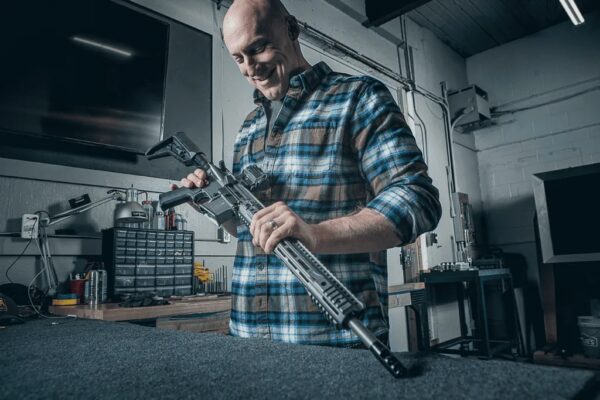
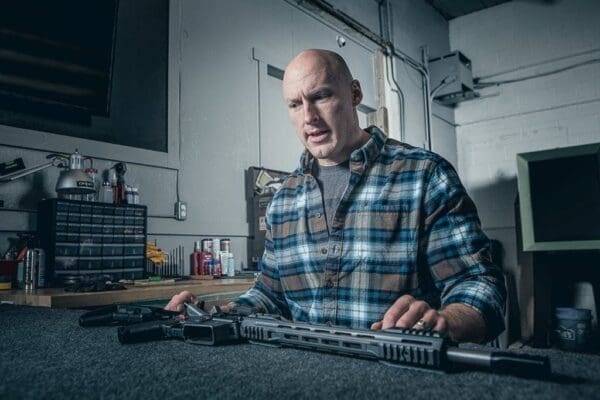
When we talk about impactful rifles in modern gun culture, it’s hard not to mention some of the American service rifles that illustrate the evolution of special-operations small arms as clearly as the Mk 12 Special Purpose Rifle (SPR). Born from the experience of special-operations personnel who wanted more precision and reach from the AR-15/M16 family without carrying a full-size 7.62 mm precision rifle, the Mk 12 became one of the defining precision 5.56 mm rifles of the Global War on Terror.
The story of the Mk 12 is not simply a story about one rifle. It is the story of an evolving requirement: give an experienced marksman a rifle that is more precise at distance than a conventional M4, while retaining the compactness, logistics, ergonomics, and ammunition commonality of the 5.56 mm family.
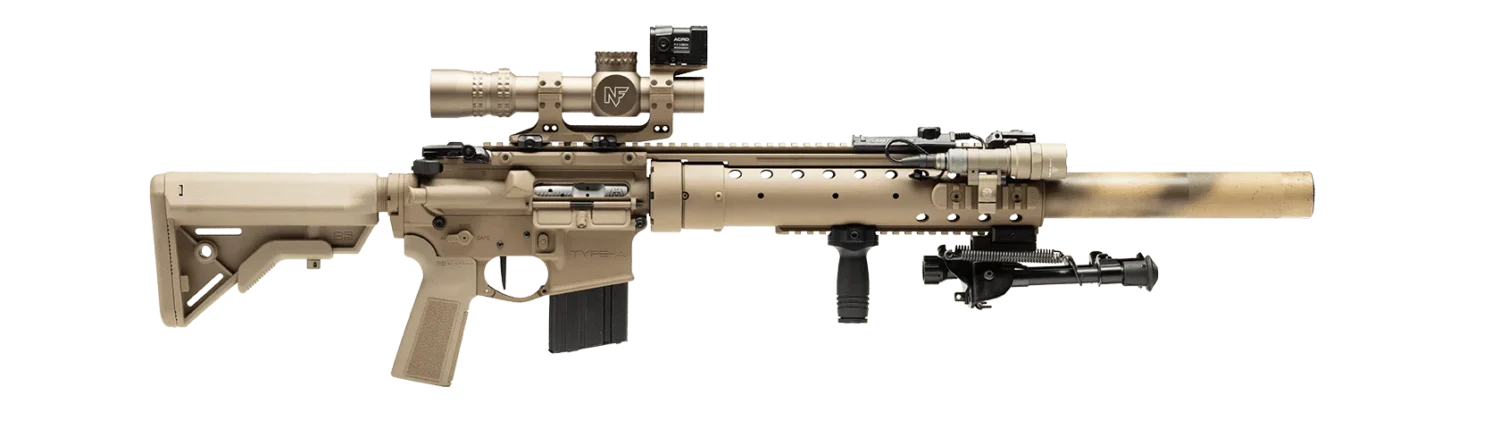
That philosophy produced the Mk 12 Mod 0, the later Mk 12 Mod 1, and the distinctive Mod H, each representing a different stage in that evolution. Decades later, the same design language has found a second life among collectors and enthusiasts, including through the TYPE-A Rifles Restomod Series, which approaches historical military patterns from a modern manufacturing perspective.
The Problem the Mk 12 Was Designed to Solve
By the 1990s, U.S. special-operations forces were already experimenting with accurized versions of the M16 and M4 family. Reconnaissance-oriented rifles—often informally called “Recce” rifles—gave operators a magnified optic, a free-floating barrel arrangement, and a more precision-oriented configuration without turning the rifle into a conventional sniper system.
Experiences from deployments, including Somalia, helped reinforce the value of this intermediate category of weapon. Operators increasingly recognized that there was a useful space between a standard carbine and a larger precision rifle. The resulting requirement was straightforward in concept but difficult to execute: Make the AR-15/M16 family substantially more useful at extended distances without sacrificing the characteristics that made the platform attractive in the first place.
The Special Purpose Rifle program emerged around the turn of the millennium. The early designation was Special Purpose Receiver (SPR), emphasizing that the initial concept was essentially a precision-oriented upper receiver that could be paired with an existing lower receiver. As development progressed, the system evolved into the complete Mk 12 Special Purpose Rifle. Naval Surface Warfare Center Crane played a central role in the program’s development and refinement.
The program’s roots were intertwined with the broader SOPMOD ecosystem and the experience gained from earlier reconnaissance rifles. Rather than representing a clean-sheet rifle, the Mk 12 was an evolutionary design—an example of military users, armorers, engineers, and manufacturers refining a familiar platform to solve a very specific operational problem.
The Importance of the SPR Concept
Understanding the original SPR concept is essential to understanding the Mk 12. The objective was not to create a conventional sniper rifle. Instead, the SPR occupied an intermediate role. It retained the AR-15/M16 operating system and 5.56 mm ammunition while emphasizing accuracy, a magnified optic, a free-floating barrel, and ammunition selected for precision performance. This distinction is important because the Mk 12 was ultimately a system, not merely a collection of hardware.
The rifle, optic, ammunition, suppressor, and supporting accessories were considered together. The development and adoption of the Mk 262 77-grain ammunition family were particularly important because the ammunition’s accuracy and external ballistic characteristics complemented the precision-oriented rifle.
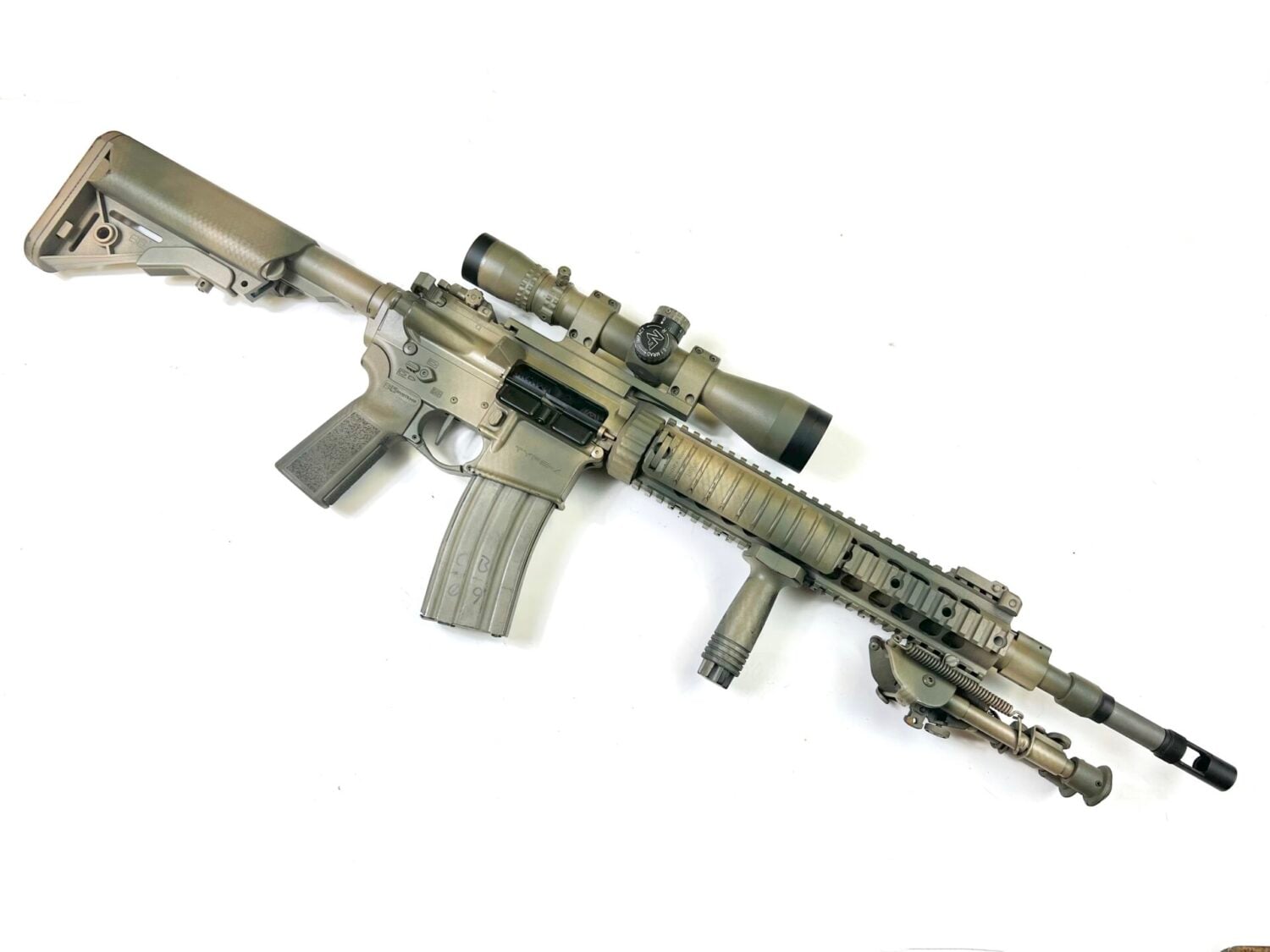
The result was a rifle that could extend the practical capabilities of the 5.56 mm cartridge while remaining considerably more portable than many traditional precision rifles.
Mk 12 Mod 0: The Original Icon
The Mk 12 Mod 0 represents the configuration most people associate with the early SPR program. Its visual identity was unmistakable. The rifle combined an 18-inch precision-oriented barrel with a Precision Reflex Industries (PRI) free-floating handguard and the distinctive A.R.M.S. #38 SPR “Swan Sleeve.” The sleeve extended the optical mounting area and helped integrate the upper receiver and handguard into a cohesive sighting system.
The Mod 0’s configuration reflected the technological environment of its era. Rather than today’s nearly universal continuous free-float rail, the rifle used a combination of specialized components from several manufacturers. That makes the Mod 0 historically fascinating.
It was a product of the transitional period between the accessory ecosystem of the late 1990s and the increasingly modular rifle systems that would become common during the 2000s. The Mod 0 was also associated with the early operational employment of the Mk 12. The first rifles were issued around 2002, and the system subsequently became an important part of U.S. special-operations forces’ precision-rifle capabilities
Why the Mod 0 Looks So Different
Much of the Mod 0’s distinctive appearance came from practical engineering compromises. The M4-style flat-top upper receiver provided limited room for certain optic configurations. The extended A.R.M.S. rail system helped solve that problem while also providing additional rigidity to the forward assembly. The PRI carbon-fiber handguard provided a free-floating interface without requiring the large quad rails that would become increasingly common later.
The result was a rifle that looks almost unusual today—but in historical context, its appearance makes perfect sense.
The Mod 0 represents an era when precision AR-15 systems were still being assembled from specialized components rather than built around the standardized modular architecture familiar to modern shooters.
Mk 12 Mod 1: The Evolution of the SPR
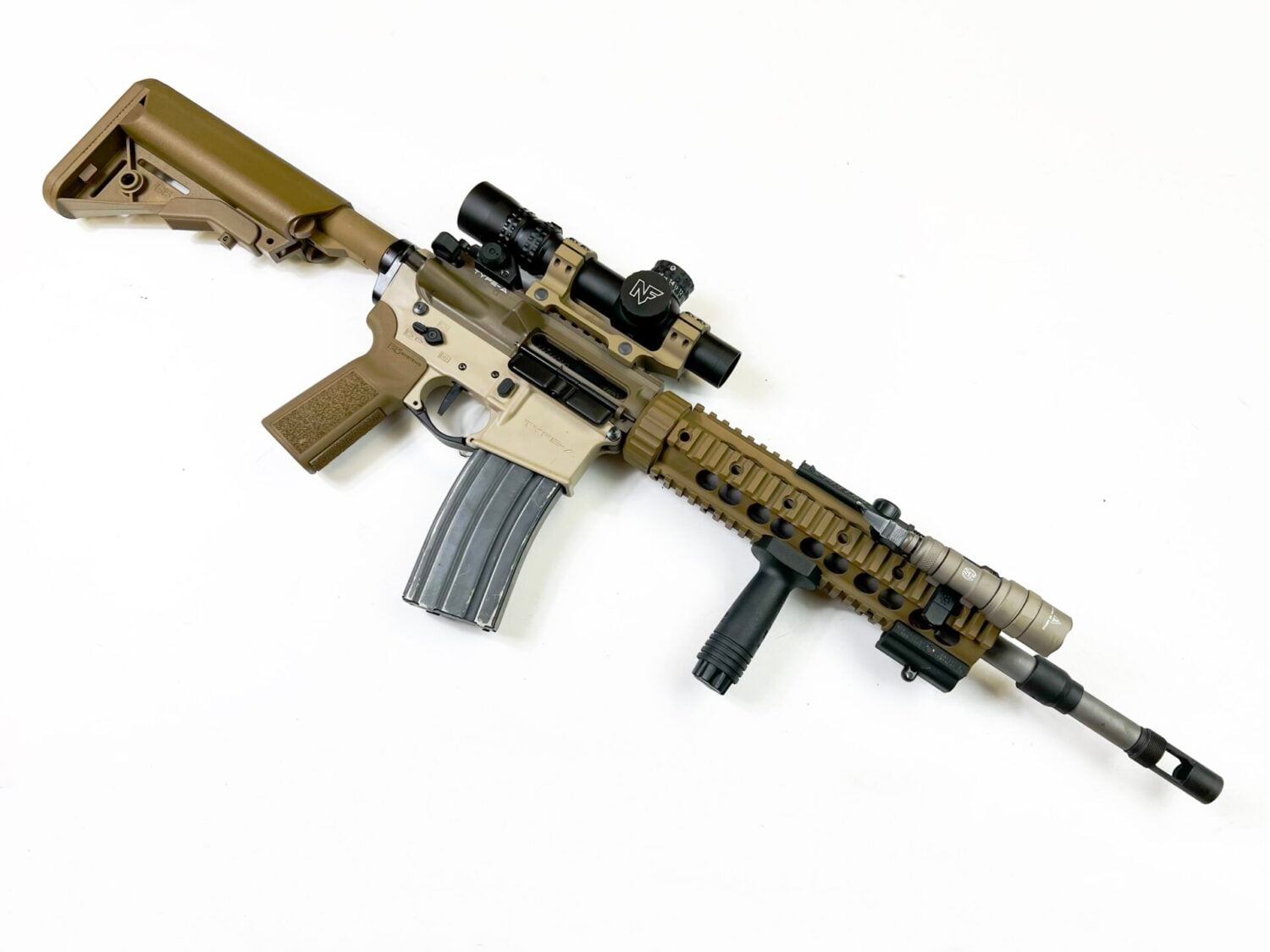
The Mk 12 Mod 1 retained the fundamental philosophy of the Mod 0 while changing some of its most visible components. The most obvious difference was the handguard. The Mod 1 adopted the Knight’s Armament Company (KAC) M4 Match Free-Floating RAS, replacing the Mod 0’s PRI/Swan Sleeve arrangement. The Mod 1 also used KAC backup iron sights.
The change reflected a broader evolution in special-operations equipment. Quad-rail systems offered extensive accessory-mounting capability and were increasingly familiar to users operating in the rapidly changing equipment environment of the early and mid-2000s. Despite the external differences, the Mod 1 remained fundamentally related to the Mod 0. Both were built around the same basic concept: an accurized 5.56 mm AR platform optimized for precision employment while retaining the portability and commonality of the M16/M4 family.
The Mod 1 saw broad use among U.S. special-operations personnel, including Army Rangers and Navy SEALs, and later saw service with Marine Corps units operating in Iraq and Afghanistan. If the Mod 0 represents the classic early SPR, the Mod 1 represents the point at which the concept had matured into a more broadly recognizable special-operations rifle.
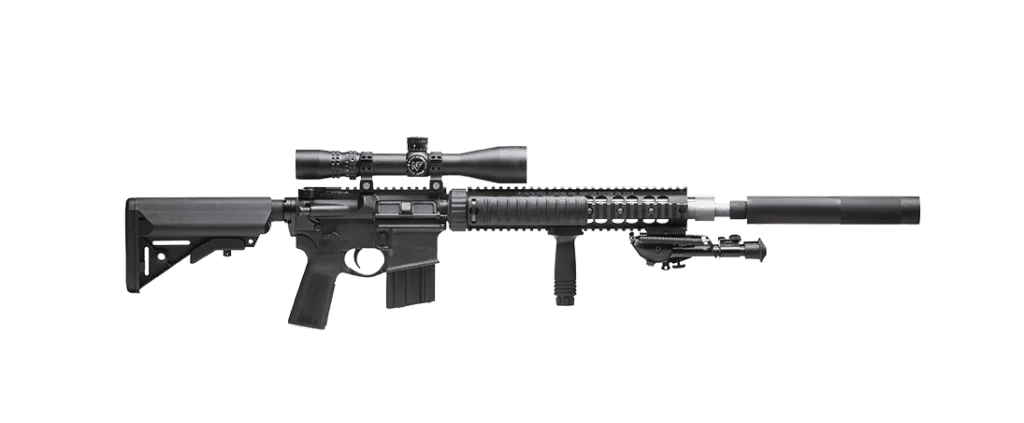
Mod 0 vs. Mod 1: Similar Philosophy, Different Era
It is tempting to describe the Mod 1 as simply a “better” Mod 0. History is more complicated. The two configurations were different answers to the same fundamental requirement.
The Mod 0’s PRI handguard and Swan Sleeve gave it a distinctive, relatively specialized configuration. The Mod 1’s KAC rail provided a more familiar accessory interface and reflected the changing expectations of users operating in an increasingly equipment-heavy environment. Neither configuration should be understood outside its historical context.
The Mod 0 belongs to the formative years of the SPR program. The Mod 1 reflects the mature Global War on Terror-era rifle ecosystem, where optics, lasers, illumination devices, grips, bipods, and other accessories were increasingly integrated into the individual weapon. This is one reason the Mk 12 remains so interesting to historians: its evolution mirrors the broader transformation of the American military carbine during the same period.
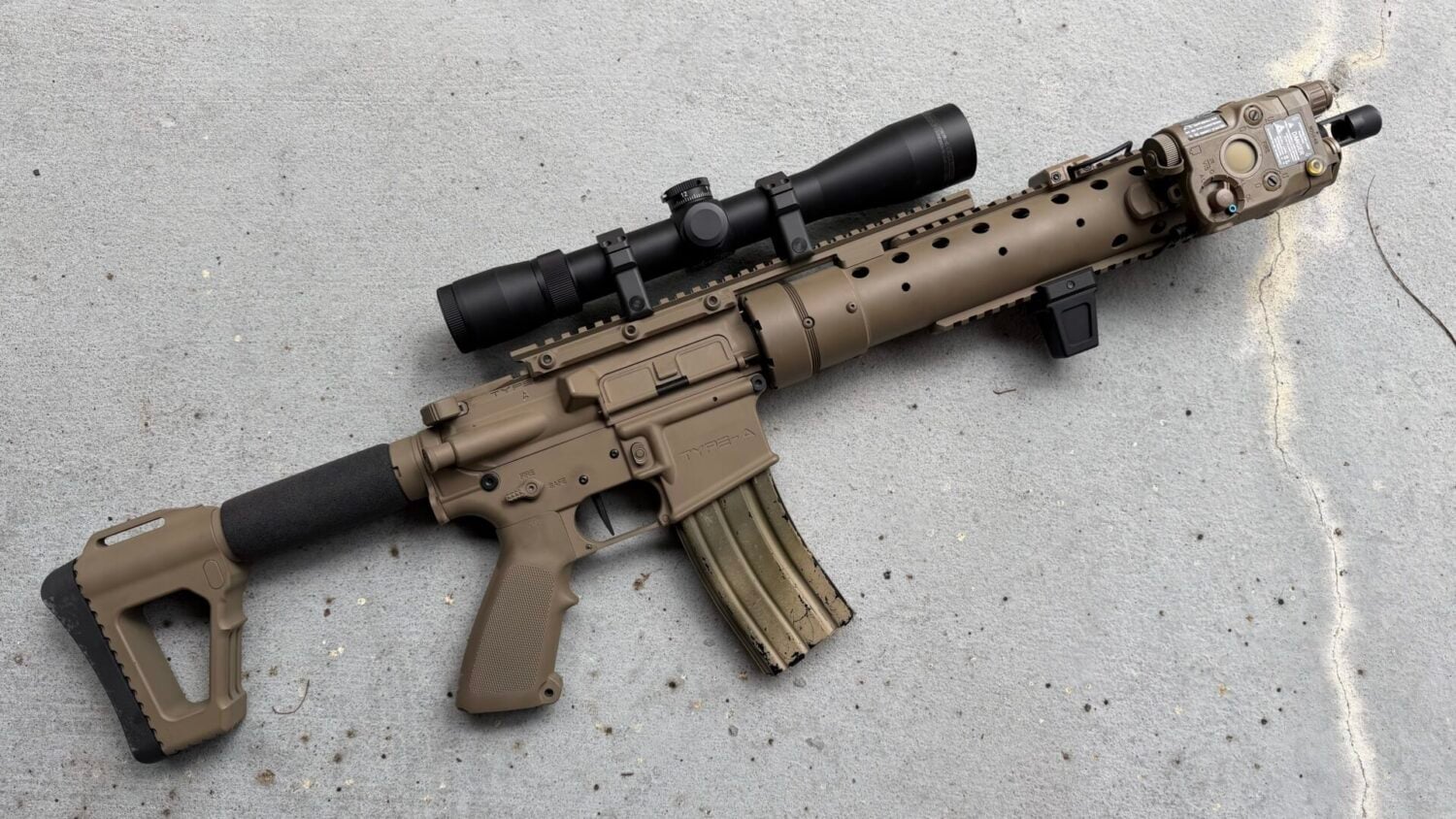
The Mod H: The “Holland” Evolution
The Mod H is perhaps the most misunderstood member of the Mk 12 family. Unlike the Mod 0 and Mod 1, “Mod H” is generally understood as an unofficial or enthusiast shorthand associated with Master Sergeant Steve Holland and the work of the U.S. Army’s 5th Special Forces Group. Rather than being simply another centrally standardized Mk 12 configuration, the Mod H emerged from an effort to make the SPR concept more compact and practical for particular operational environments. The fundamental problem was easy to understand.
An 18-inch precision rifle provides useful ballistic performance, but it is not always ideal when working around vehicles, buildings, confined spaces, or other environments where overall length becomes increasingly important. The Mod H addressed that problem by shortening the rifle while retaining much of the SPR’s precision-oriented character.
The resulting configuration is commonly associated with a 16-inch barrel, PRI components, and a shortened rail arrangement. The exact configurations varied, however, and surviving examples should not necessarily be expected to conform to a single rigid parts list. That variation is historically significant.
The Mod H demonstrates that military small-arms development does not always proceed through neat, sequential “Model A → Model B → Model C” programs. Sometimes experienced users simply modify an existing system until it better fits their mission.
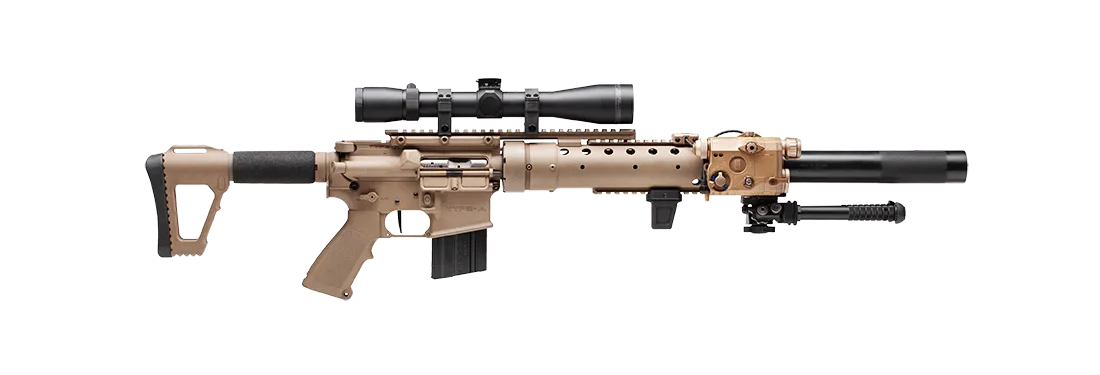
Why the Mod H Matters
The Mod H represents one of the most important lessons of the entire Mk 12 story: The rifle was never really about a fixed collection of components. It was about solving an operational problem. The Mod 0 solved one version of that problem. The Mod 1 refined the concept as equipment and user requirements changed.
The Mod H took the underlying idea in another direction, prioritizing a more compact package while retaining the precision-oriented character of the SPR. In that sense, the Mod H arguably brings the Mk 12 story full circle, back toward the compact reconnaissance rifles that helped inspire the original SPR concept.
The Mk 12 in the Global War on Terror
The Mk 12’s reputation was built during the wars in Afghanistan and Iraq. Its importance came from the gap it occupied. Conventional carbines were optimized for general-purpose employment, while traditional sniper rifles were optimized for specialized precision roles. The Mk 12 provided another option: a relatively compact semiautomatic rifle capable of delivering precision fire at distances beyond the practical sweet spot of the ordinary carbine.
That made the rifle particularly relevant to reconnaissance, special operations, designated marksman, and other roles where mobility and precision had to coexist. The rifle was not revolutionary because it introduced a completely new operating system. It was revolutionary in a subtler way: it demonstrated how far an established rifle architecture could be pushed when the weapon was treated as an integrated precision system.
The Mk 12 program was ultimately phased out around 2017 as newer systems and changing requirements reshaped the special-operations small-arms inventory.
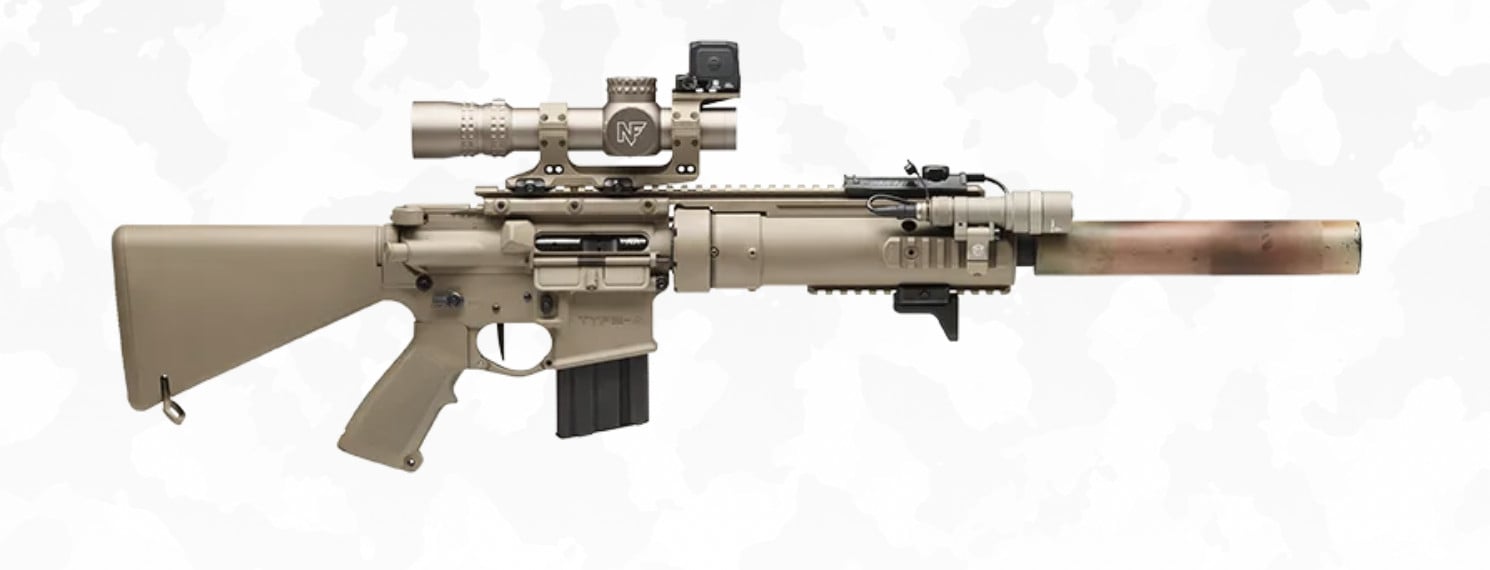
From Military Equipment to Collectors’ History
Few retired military rifles have developed as strong a collector and enthusiast following as the Mk 12. Part of the appeal is visual. The rifle has a distinctive silhouette that immediately evokes the early 2000s.
Part of it is historical. The Mk 12 is associated with a period in which American special-operations equipment was evolving at remarkable speed. And part of the appeal is technical history. The rifle captures an important transitional moment between the early custom-built precision ARs of the 1990s and the highly modular precision carbines that dominate the modern market.
This has produced an enormous interest in historically inspired Mk 12 builds, often called “clones,” as well as modern rifles that deliberately preserve the character of the original while using contemporary manufacturing. That is where the TYPE-A Rifles Restomod Series enters the conversation.
TYPE-A Rifles and the Restomod Philosophy
The term restomod is useful because it describes something different from a museum reproduction. A traditional clone attempts to reproduce a historical configuration as closely as possible. A restomod, by contrast, preserves the visual and conceptual identity of an older design while allowing modern manufacturing, materials, components, and production methods to enter the equation.
That philosophy fits the broader trajectory of the Mk 12 unusually well. The original SPR itself was an evolutionary rifle. It took the familiar AR-15/M16 architecture and adapted it to a specialized role. Our TYPE-A Rifles Restomod Series similarly approaches historic rifle patterns as starting points for modern interpretations rather than treating history as a requirement that every component must be reproduced exactly.
Our TYPE-A Rifles Restomod Series therefore belongs to a broader modern trend: preserving the recognizable identity of historically important American military rifles while applying contemporary manufacturing standards.
That distinction is worth emphasizing because our TYPE-A Rifles interpretation should not be confused with an original U.S. military Mk 12. It is a modern commercial interpretation informed by the historical rifle.
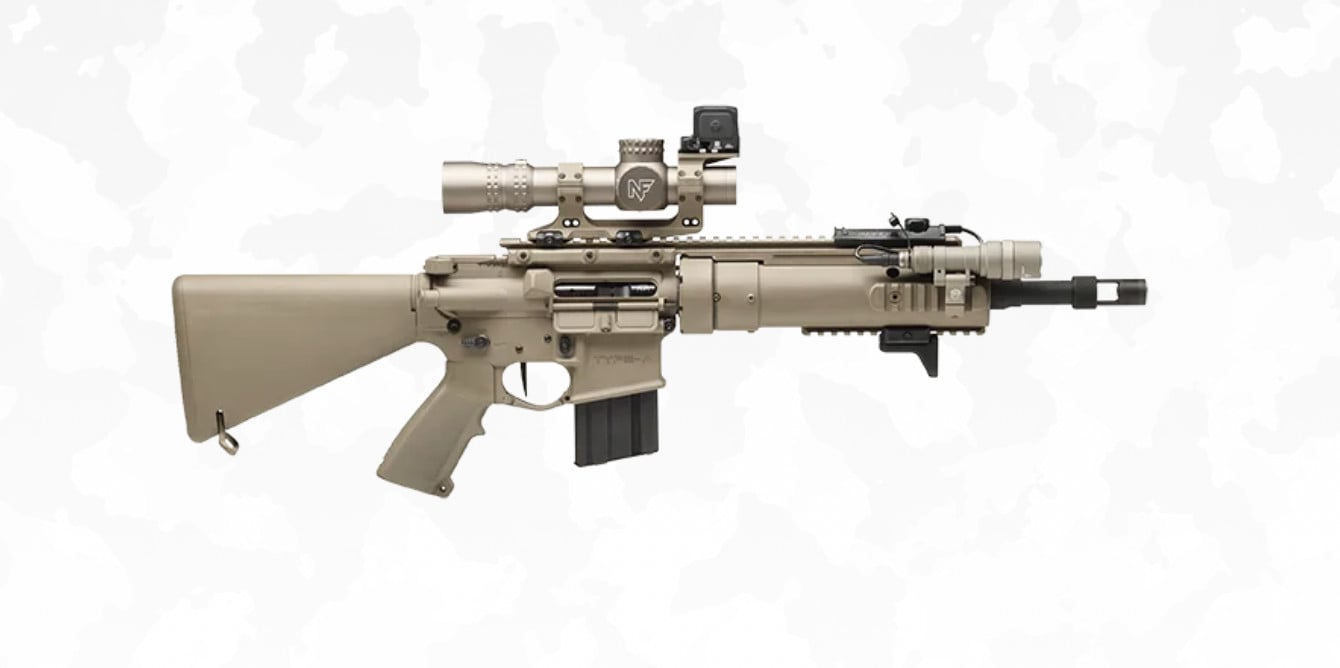
TYPE-A Rifles: Preserving the Spirit Rather Than Freezing the Past
The appeal of our TYPE-A Rifles Restomod Series is particularly understandable when viewed against the history of the Mk 12 itself. The original rifle evolved because users wanted something different from what they already had.
That is precisely the philosophy behind a restomod: retain the attributes that made an older design distinctive while reconsidering how those attributes can be delivered using contemporary manufacturing.
The TYPE-A Rifles approach also fits neatly into the modern collector culture surrounding military-pattern rifles. Enthusiasts can appreciate the historical appearance and lineage without necessarily insisting that a modern commercial rifle duplicate every manufacturing detail of a two-decade-old military weapon.
In that respect, our TYPE-A Rifles Restomod Series represents a continuation of the Mk 12’s larger story: the AR platform remains adaptable because its basic architecture lends itself to different missions, eras, and interpretations.
What Makes the Mk 12 Enduringly Important?
The Mk 12’s importance is ultimately less about individual components than about the concept it represents. It showed that the distinction between “carbine” and “sniper rifle” was not absolute.
There was room between those categories for a lightweight, semiautomatic precision rifle that could accompany a small unit without imposing the size and weight penalties associated with larger-caliber systems. That idea has had a lasting influence. Modern precision ARs, designated-marksman rifles, Recce-style rifles, and other accurized carbines all exist within a design space that the SPR program helped define.
The Mk 12 also demonstrated the importance of user feedback. The progression from early SPR concepts to Mod 0, Mod 1, and eventually the Mod H illustrates a continuous process of adaptation.
Our TYPE-A Rifles Restomod Series is vital for the same reason. It reflects the fact that historically significant rifle designs do not necessarily disappear when their military service ends. They can become reference points for collectors, historians, manufacturers, and enthusiasts who continue asking how those designs might be interpreted decades later.
Mod 0, Mod 1, and Mod H in Historical Perspective
Viewed together, the three principal configurations tell a remarkably coherent story.
The Mk 12 Mod 0 represents the original mature SPR concept: an 18-inch precision-oriented rifle using the distinctive PRI/Swan Sleeve architecture.
The Mk 12 Mod 1 represents refinement and broader operational adoption, most visibly distinguished by its KAC free-floating rail and associated sighting arrangement.
The Mod H represents user-driven adaptation: a shorter, more compact interpretation associated with Steve Holland and the 5th Special Forces Group rather than simply being another universally standardized configuration.
Together, they demonstrate that military rifle development is rarely linear. A weapon evolves because people use it, identify shortcomings, experiment with alternatives, and feed those experiences back into the design. That is the real history of the Mk 12.
The Legacy of the Mk 12
The Mk 12 occupies a special place in modern American small-arms history because it sits at the intersection of several important developments: the maturation of the AR-15 platform, the rise of special-operations customization, the growing sophistication of military optics, the development of precision 5.56 mm ammunition, and the operational lessons of the post-Cold War era. It began as an answer to a very specific problem. It became a family of rifles. And eventually it became a historical template.
The TYPE-A Rifles Restomod Series is part of that modern legacy, demonstrating how a retired military concept can continue to influence contemporary rifle design without pretending that a modern commercial firearm is an original military-issued weapon.
For historians and enthusiasts, that distinction makes the story more interesting, not less The Mk 12 was never simply a rifle. It was an example of iterative design—an existing platform repeatedly adapted to meet the realities of the people who used it.
From the early Recon Rifle and SPR experiments, through the Mk 12 Mod 0, the Mk 12 Mod 1, and the Mod H, the story is one of refinement rather than revolution, and that may be the most enduring lesson of the entire program.
The most influential military rifles are not always the ones that introduce the most radical technology. Sometimes they are the rifles that take a proven idea, understand what users actually need, and refine it until the result becomes something greater than the sum of its parts. The Mk 12 was one of those rifles.
The TYPE-A Rifles Restomod Series is one of the modern expressions of the continuing fascination with that legacy. The historical distinctions above are deliberately conservative: the Mod H’s informal status and the differences between military Mk 12 configurations are areas where enthusiast sources sometimes disagree. The history of this rifle system cannot be understated, though, and continues to have an overwhelming popular spot in modern rifle manufacturing.