In the world of American military carbines, the 723, or Desert Storm Delta Carbine, occupies the fascinating space between the Cold War and the modern era, much like the Colt Model 723. Compact without being excessively short, traditional without being obsolete, and simple without being unsophisticated, the 723 became closely associated with U.S. special operations during a pivotal period in military small-arms history.
Today, enthusiasts often refer to a particular interpretation of this rifle as the “TYPE A Desert Storm Delta Carbine” or, more casually, a “723 restomod.” Those names are modern enthusiast terminology rather than official Colt or U.S. military nomenclature, but they describe an idea that has become increasingly popular: preserving the unmistakable visual character of the early-1990s Delta Force carbine while incorporating carefully chosen modern improvements.
To understand why this particular configuration has such enduring appeal, it helps to look beyond the parts themselves and examine the period, the people, and the philosophy that produced the original.
From the CAR-15 to the 723
By the late 1980s, the standard American infantry rifle was still dominated by the full-length M16 family. Special operations units, however, often had very different requirements. A shorter weapon could be advantageous when working around vehicles, aircraft, buildings, or other confined spaces. The challenge was finding a carbine that retained the useful characteristics of the 5.56mm rifle while being substantially handier than a full-length M16 Colt; the answer evolved through several generations of carbines. The Model 653 had already established the basic concept, but the Model 723 represented an important step forward.
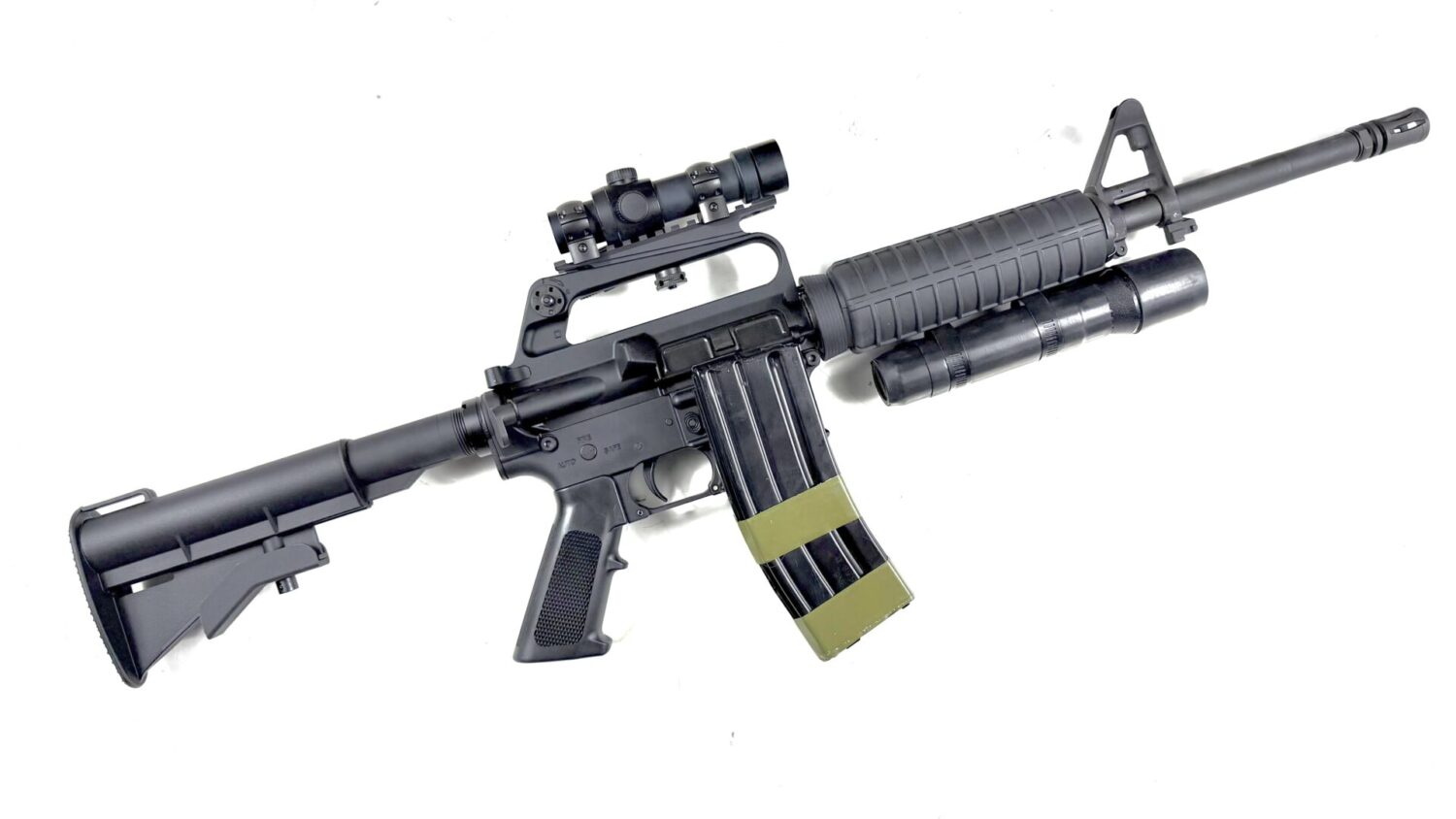
The 723 combined the familiar CAR-15 concept with features associated with the newer M16A2 generation. Historical references generally identify the 723 with a roughly 14.5-inch barrel, a fixed carry-handle upper receiver with an A1-style sight arrangement, a brass-deflector-equipped upper, and a collapsible carbine stock.
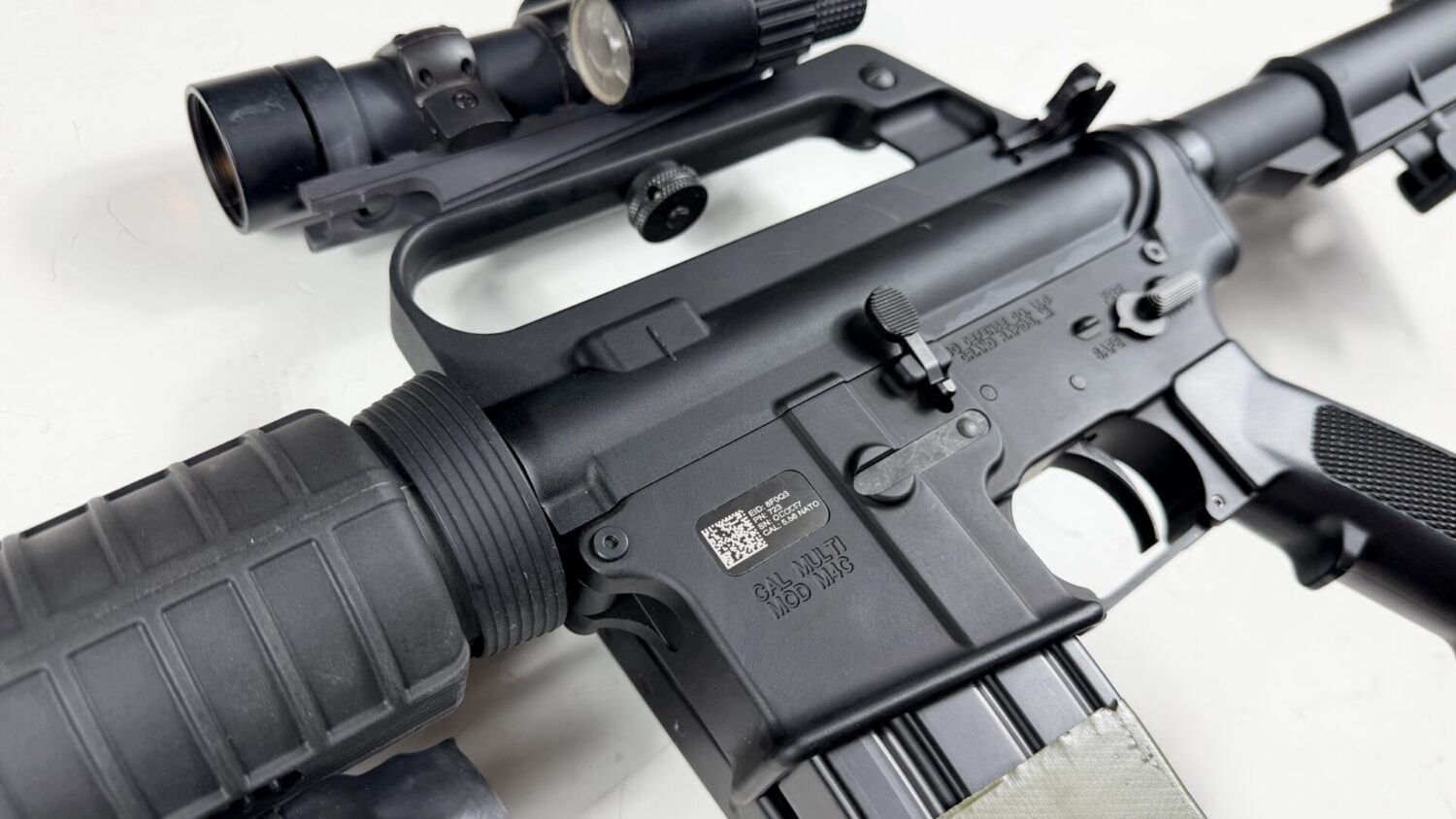
Different production periods and individual weapons could vary, however, which is one reason photographs of period carbines do not always look identical. That variability is important. There was not necessarily one single, perfectly standardized “Delta 723” that every operator carried. These were working weapons, and special operations units had a long tradition of modifying equipment to suit individual requirements.
Delta Force and the 723
The Model 723 became particularly associated with 1st Special Forces Operational Detachment-Delta, commonly known as Delta Force. Former Delta operator Larry Vickers has provided some of the most valuable firsthand commentary on the subject. According to Vickers, he received a Colt Model 723 when he entered Delta’s Operator Training Course in late 1988. He later used the carbine during operations in both Panama and Iraq.
That history is significant because it places the 723 at the center of an important transition in American small-arms development. The carbine was not simply a shortened M16. It represented a different approach to the rifle: compact enough for close work, but still retaining the general characteristics and ammunition of a service rifle.
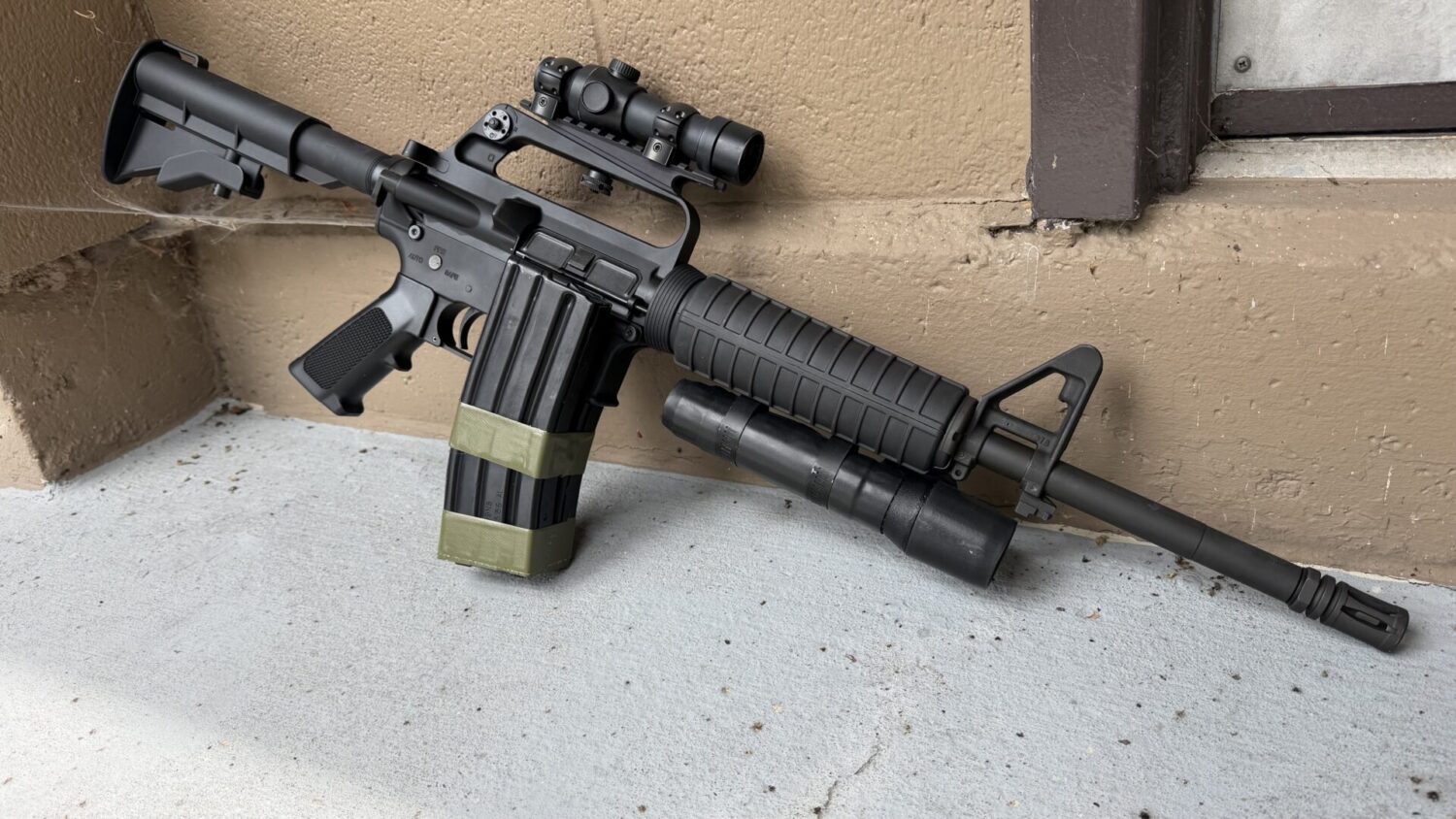
Delta’s experience with carbines like the 723 would ultimately help demonstrate the value of a highly adaptable, compact 5.56mm service weapon. The eventual M4 family would formalize many of the lessons learned during this period. In that sense, the 723 sits directly between two generations of American military rifles. The M16A1 era was ending. The M4 era was beginning. The 723 occupied the bridge between them.
Desert Storm: The Carbine Becomes an Icon
Operation Desert Storm began on January 16, 1991, following the Iraqi invasion of Kuwait and the preceding months of Operation Desert Shield. The conflict represented one of the largest concentrations of American military power since the Second World War. For Delta Force, the conflict produced some of the most recognizable imagery associated with the 723.
Delta teams operated in Iraq hunting mobile Iraqi Scud missile systems, among other missions. Photographs from the period helped establish the distinctive visual identity that enthusiasts now associate with the “Desert Storm Delta” carbine. The rifle was remarkably understated.
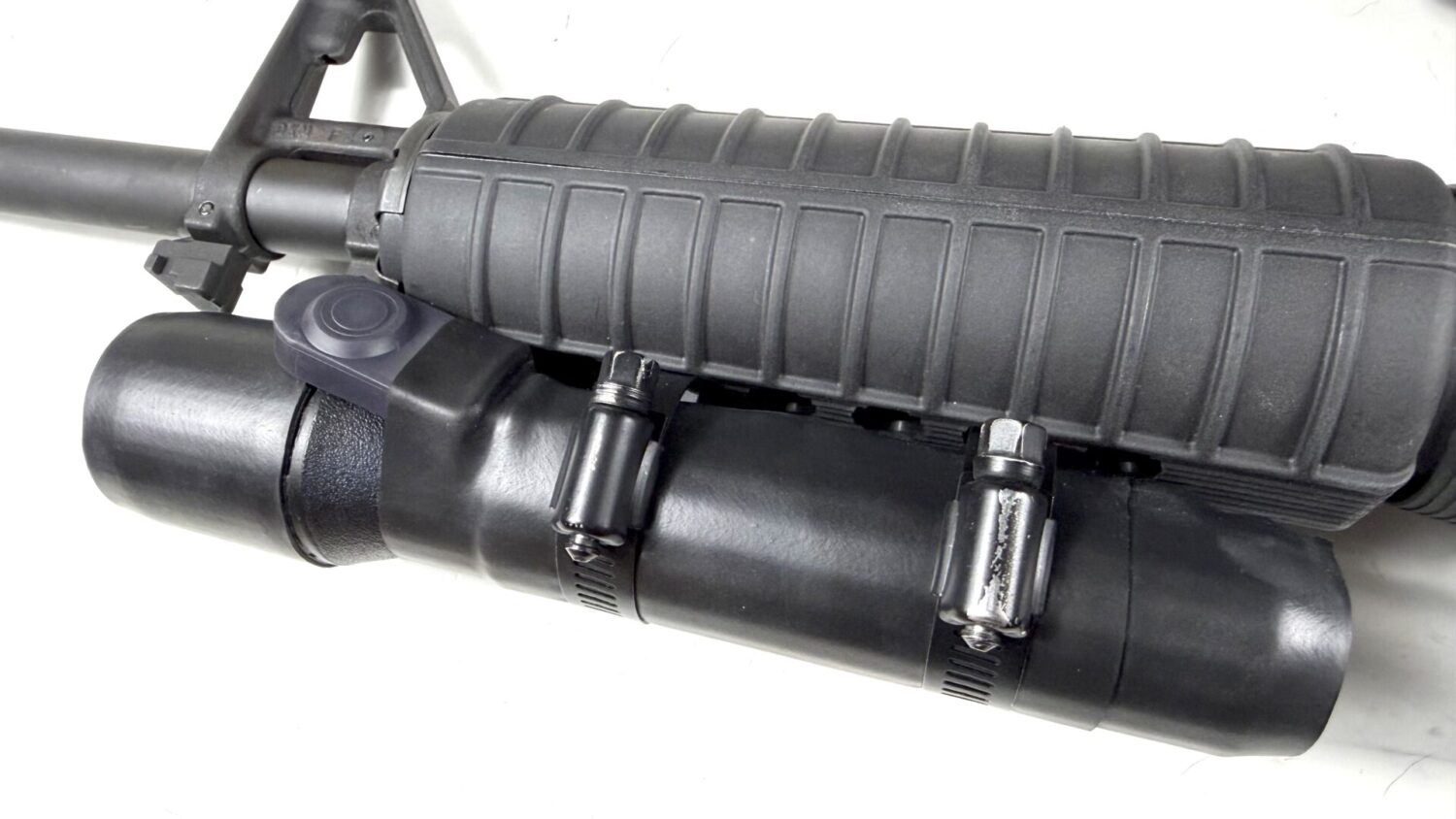
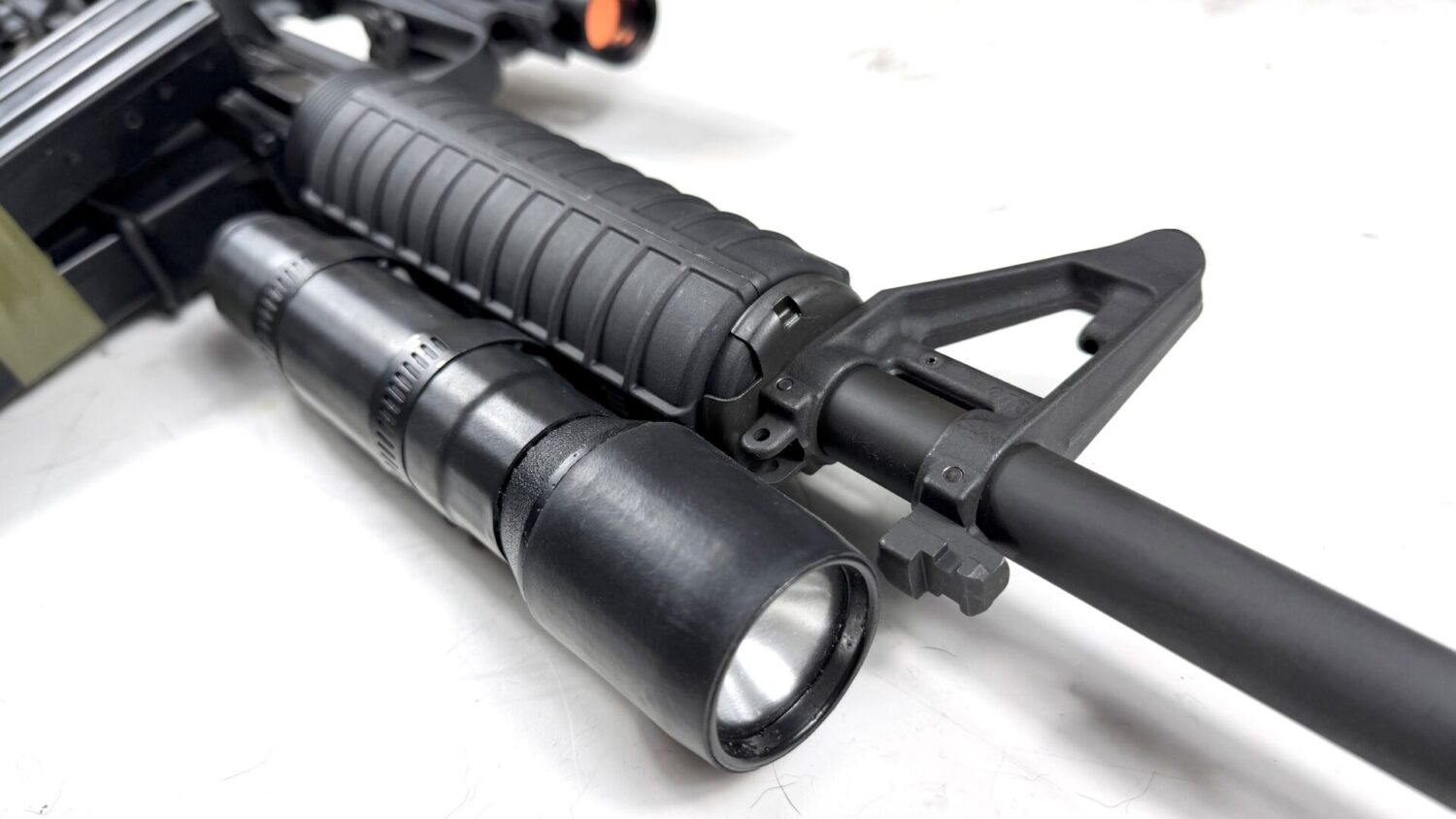
There was no large modern free-float rail system. No collection of electronic accessories covered every available surface. Instead, the weapon generally retained the basic lines of the original carbine, with only a small number of mission-specific additions. That simplicity is one of the reasons the 723 has aged so well aesthetically.
What Makes a “Desert Storm” 723 Different?
The answer is more complicated than simply listing a collection of components. Period photographs show variation. Some carbines had different barrel profiles, optics, or accessory arrangements. Even the same general family of carbines could look noticeably different depending upon the individual weapon and its mission.
One commonly encountered configuration features the characteristic fixed carry handle, compact carbine proportions, slim handguards, and a collapsible stock. Period Delta carbines could also be fitted with early Aimpoint optics and other accessories. This is where the modern concept of the 723 restomod becomes interesting.
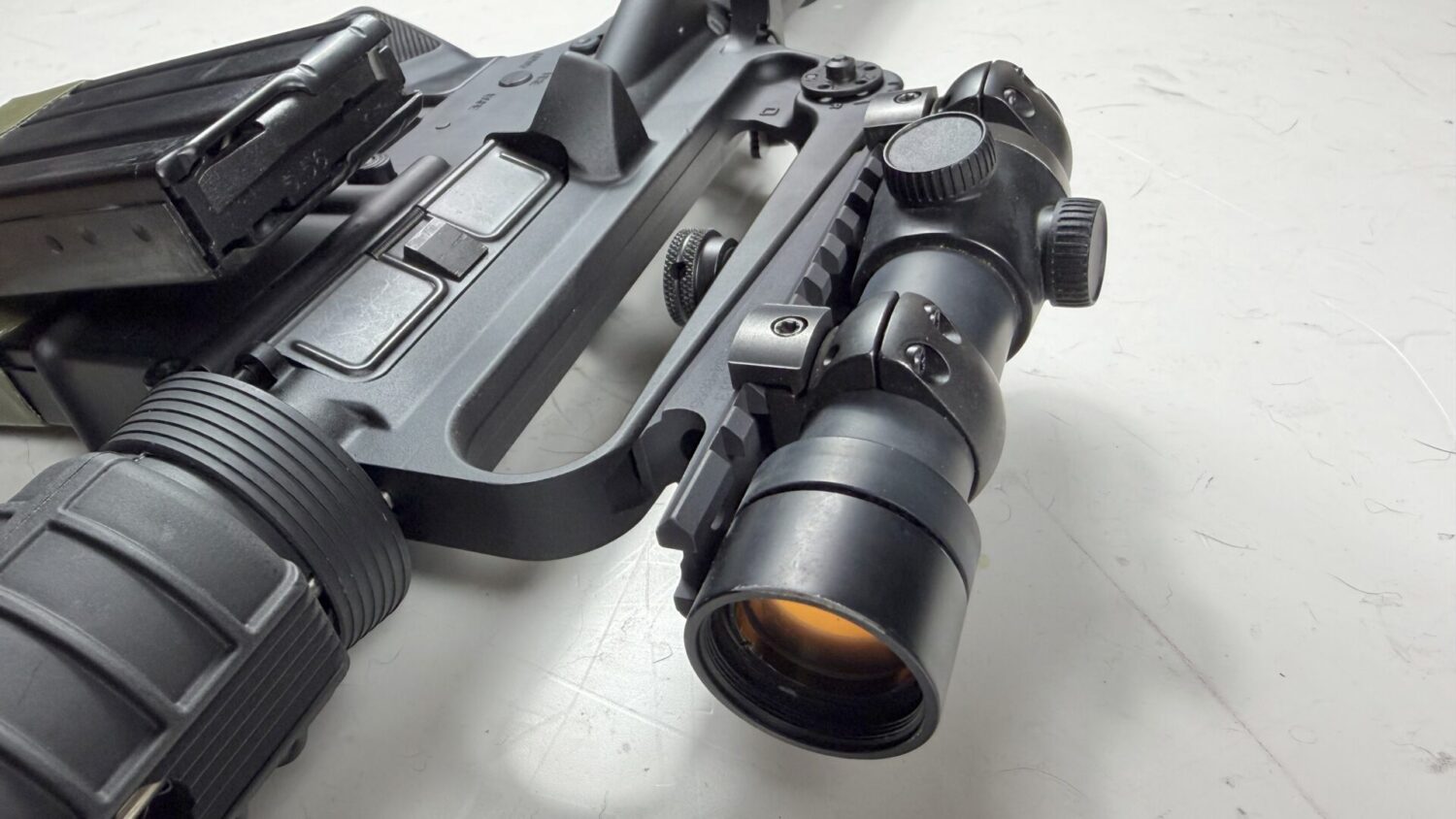
Rather than attempting to reproduce one particular rifle down to every individual marking, a restomod seeks to capture the character of the historical weapon while benefiting from modern manufacturing, materials, and reliability standards. It is less “museum replica” and more “what if this classic rifle were thoughtfully refreshed for today’s enthusiast?”.
The Appeal of the “Old Meets New” Philosophy
The 723 restomod is compelling because it avoids two extremes. On one end is the museum reproduction: historically exact, visually authentic, and intended primarily as a representation of a particular moment in time. On the other is the fully modern tactical carbine, where historical appearance has largely disappeared beneath contemporary accessories and equipment.
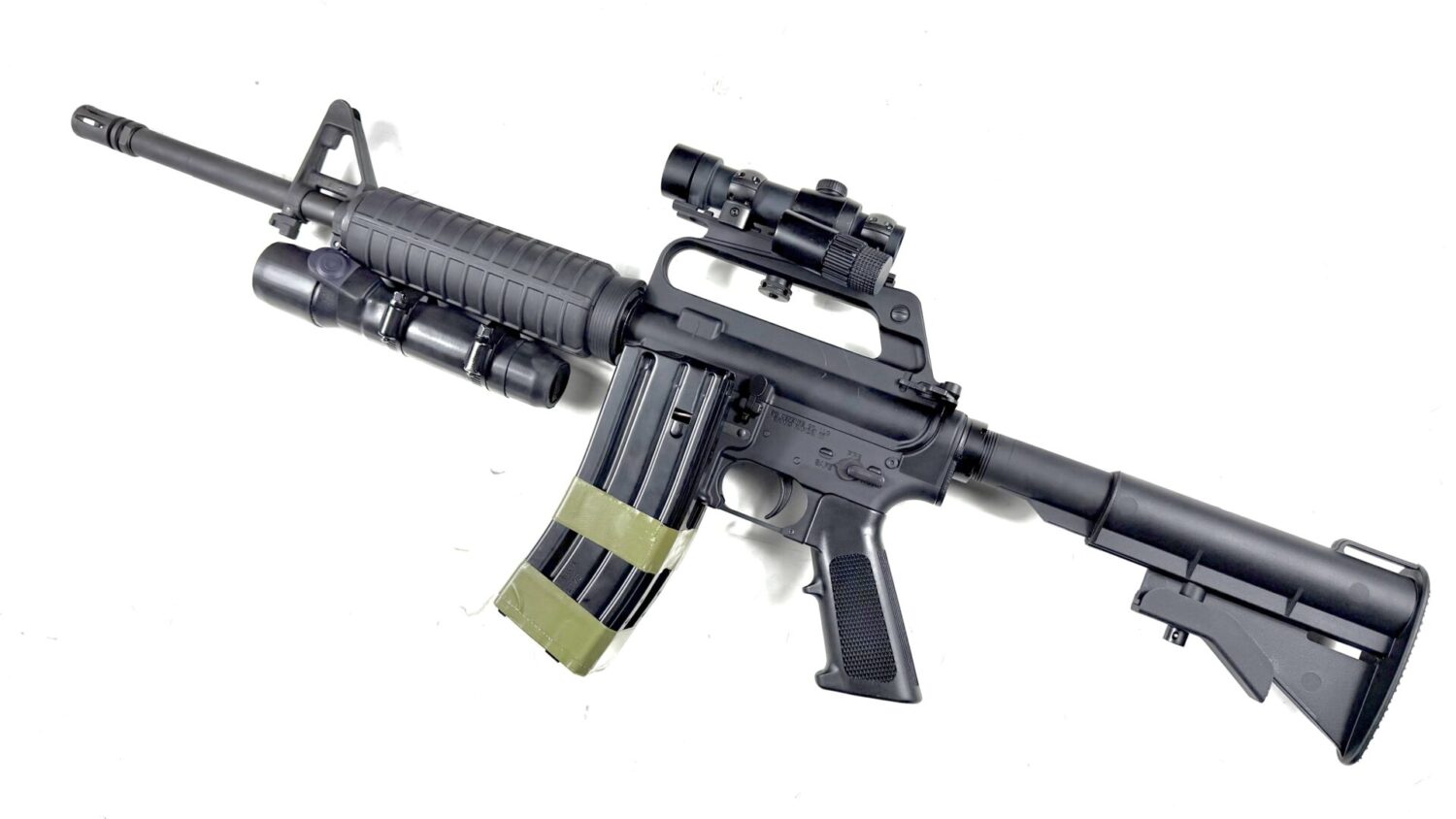
The restomod occupies the middle ground. It preserves the character of the original while recognizing that modern users have access to better manufacturing tolerances, improved materials, contemporary optics, and decades of accumulated engineering knowledge. In automotive terms, it is the difference between restoring a classic sports car exactly as it left the factory and building a classic-looking car that you would actually want to drive every day.
The 723 As a Transitional Rifle
Perhaps the best way to understand the Colt 723 is to think of it as a transitional weapon. It carried the DNA of the M16A1 generation. It incorporated elements associated with the emerging M16A2 family.
It anticipated the compactness and modularity that would become defining characteristics of the M4. And it demonstrated how much capability could be extracted from a relatively simple carbine when experienced users were allowed to tailor it to their needs. That transitional character is exactly what makes the rifle historically interesting. The 723 wasn’t the final answer. It was an important question being asked at exactly the right moment.
From Desert Storm to the M4
The story did not end in Iraq. Carbines of this general pattern continued to be associated with Delta Force into the early 1990s, including the period surrounding Operation Gothic Serpent in Somalia. The 723’s reputation subsequently grew enormously through photography, military history, books, films, and the experiences of veterans who had actually carried them.
Eventually, the M4 family offered a more mature solution. The M4 incorporated many of the characteristics that had made carbines such as the 723 attractive while providing a more standardized platform for the broader military. In retrospect, the 723 looks almost prophetic. It anticipated the direction military rifles were heading before that direction had been fully standardized.
Why Collectors Still Love the 723
More than three decades after Desert Storm, the 723 remains popular because it represents something larger than a particular rifle. It represents an era. The early 1990s were a remarkable transitional period in American military equipment. Cold War doctrine was giving way to a new operational environment. Special operations units were increasingly influential in weapons development. Electronic optics were becoming practical. Compact carbines were moving toward the mainstream. As a result, the 723 was there for much of that transition.
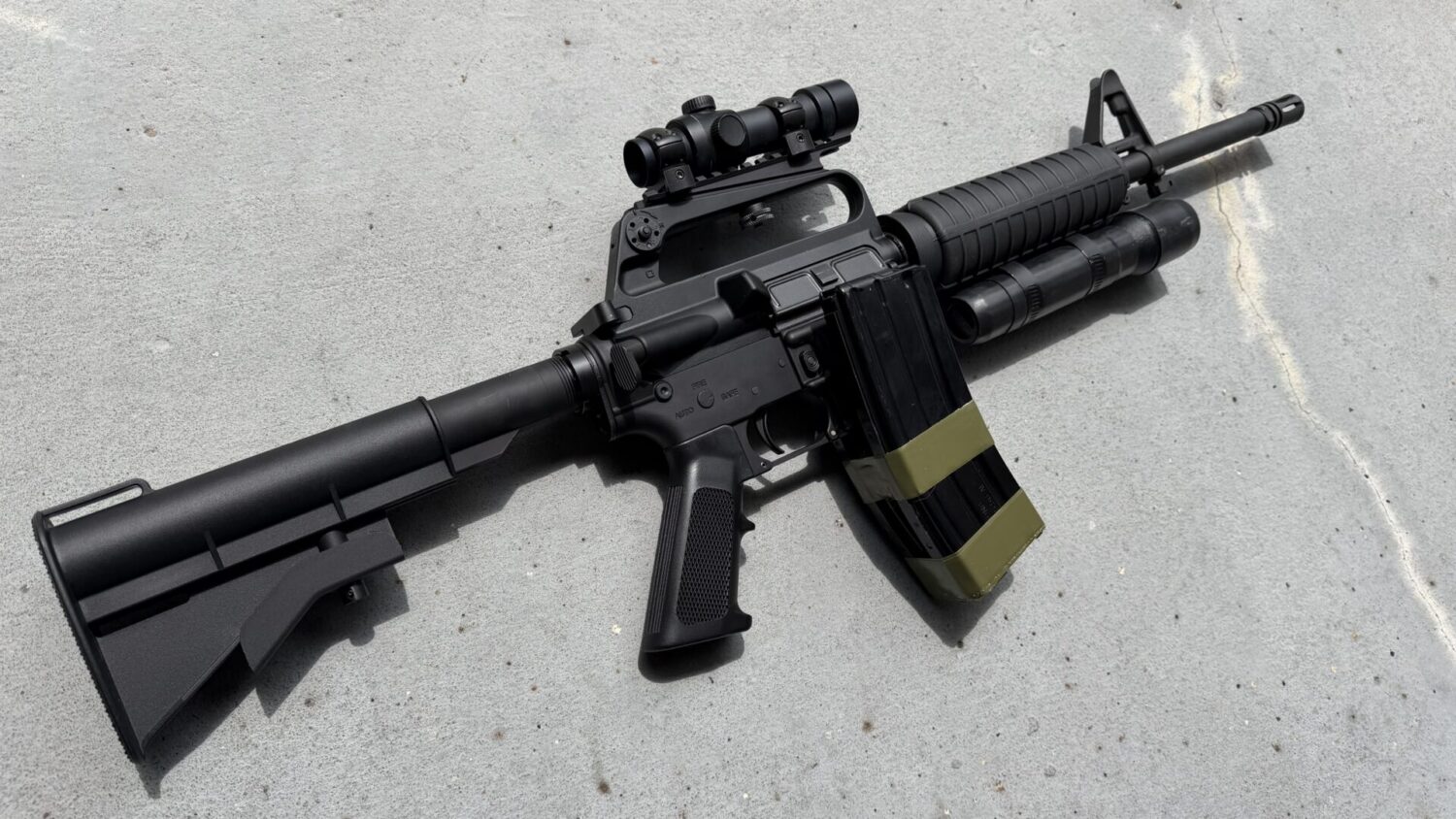
For enthusiasts, reproducing or restomodding one is therefore less about creating the “perfect” rifle and more about preserving a snapshot of that moment. The appeal is partly mechanical, partly historical, and partly cultural. It is the look of an era when military equipment was becoming more specialized—but before modern modularity completely transformed the rifle.
A Historical Note on Authenticity
One of the most useful lessons when researching a Desert Storm-era 723 is to avoid treating every photograph as evidence of a universal configuration. Period weapons varied. Barrel profiles varied. Optics varied. Accessories varied. Individual weapons could be modified over time. Different photographs can therefore appear contradictory while actually representing different legitimate configurations. That is why a good historical recreation should distinguish between:
Documented: directly supported by photographs, firsthand accounts, or reliable historical references.
Plausible: consistent with known equipment of the period but not definitively documented on the specific rifle being recreated.
Modern interpretation: added for contemporary usability or manufacturing practicality.
That three-part distinction makes a restomod more intellectually honest—and, arguably, more interesting.
The Enduring Legacy of the 723
The Colt Model 723 occupies a unique position in American small-arms history. It was compact but not extreme. When looking at the 723s, they were certainly old-fashioned but forward-looking. It was relatively simple but highly adaptable. And most importantly, it was a weapon that evolved in the hands of people who actually used it.
The TYPE A Desert Storm Delta Carbine is the modern interpretation that captures that legacy. It takes the recognizable visual identity of the early-1990s Delta 723 and combines it with the philosophy of a restomod: respect the original, understand why it looked and worked the way it did, and make thoughtful allowances for the present day.
Ultimately, that is what makes the 723 so compelling. It isn’t famous because it was the most technologically advanced rifle of its generation. It is famous because it arrived at the right moment—and because the people who carried it understood how much could be accomplished with a simple carbine when the weapon was adapted to the mission. The 723 wasn’t merely a predecessor to the M4. It was part of the evolutionary experiment that helped make the M4 inevitable. And that may be the best reason to remember the Desert Storm Delta Carbine today.