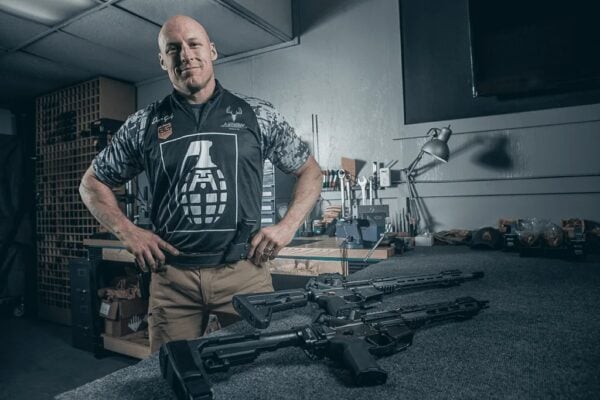
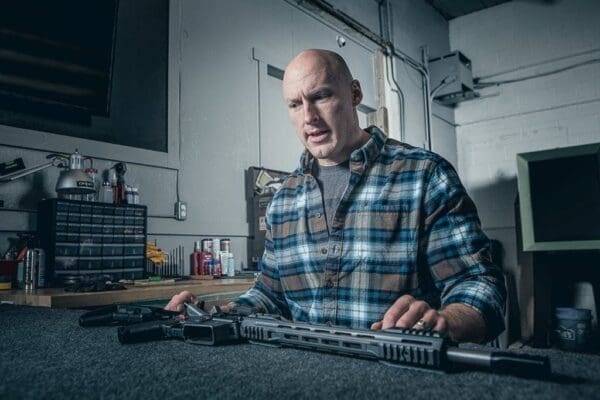
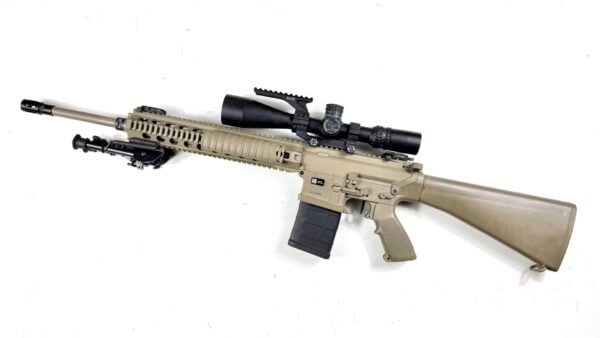
There was a period in modern rifle history when the AR-15 platform was changing almost as quickly as the missions it was being asked to perform. The early years of the Global War on Terror accelerated that evolution. Military and special operations users were adapting carbines in the field, experimenting with optics, lights, aiming lasers, vertical grips, and increasingly sophisticated rail systems. Some of those configurations were eventually standardized. Others remained relatively obscure, remembered primarily through photographs, enthusiast research, and the collections of those who were there. Among the most distinctive of these rifles was the MRE.
Today, the MRE configuration has become one of the most recognizable—and sought-after—expressions of the early Global War on Terror-era carbine. Its combination of a traditional front sight base, extended free-float rail, compact carbine proportions, and unmistakably early-2000s character gives it an identity that is difficult to reproduce with today’s more streamlined rifle designs.
That is part of what makes the TYPE-A Rifles Restomod Series so interesting. Rather than simply copying the past, TYPE-A has embraced the idea of taking historically influential rifle configurations and giving them a modern interpretation. The result is a rifle that pays tribute to an important period in AR history while being manufactured with the expectations of a contemporary firearm.
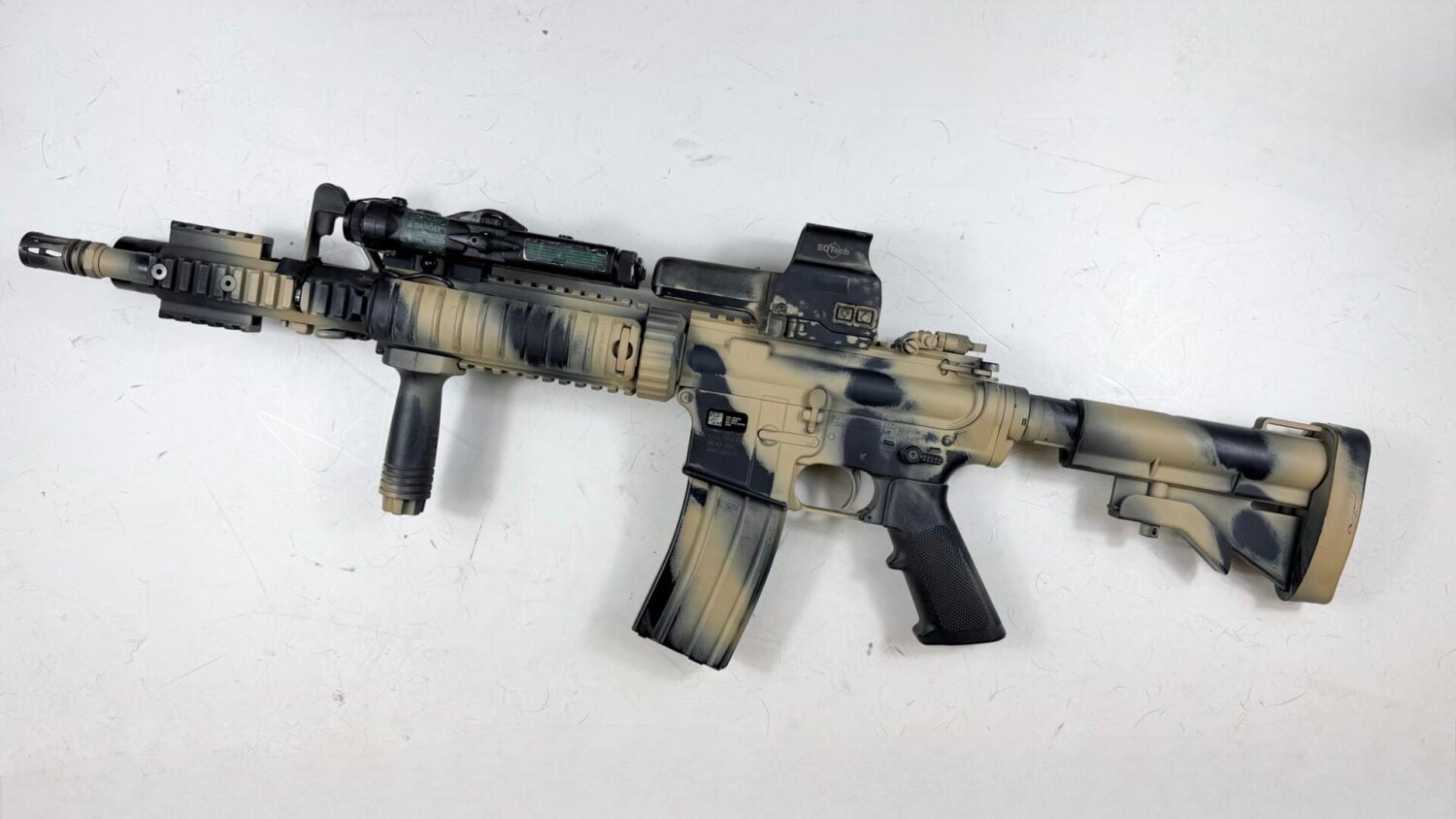
What Exactly Is an MRE Rifle?
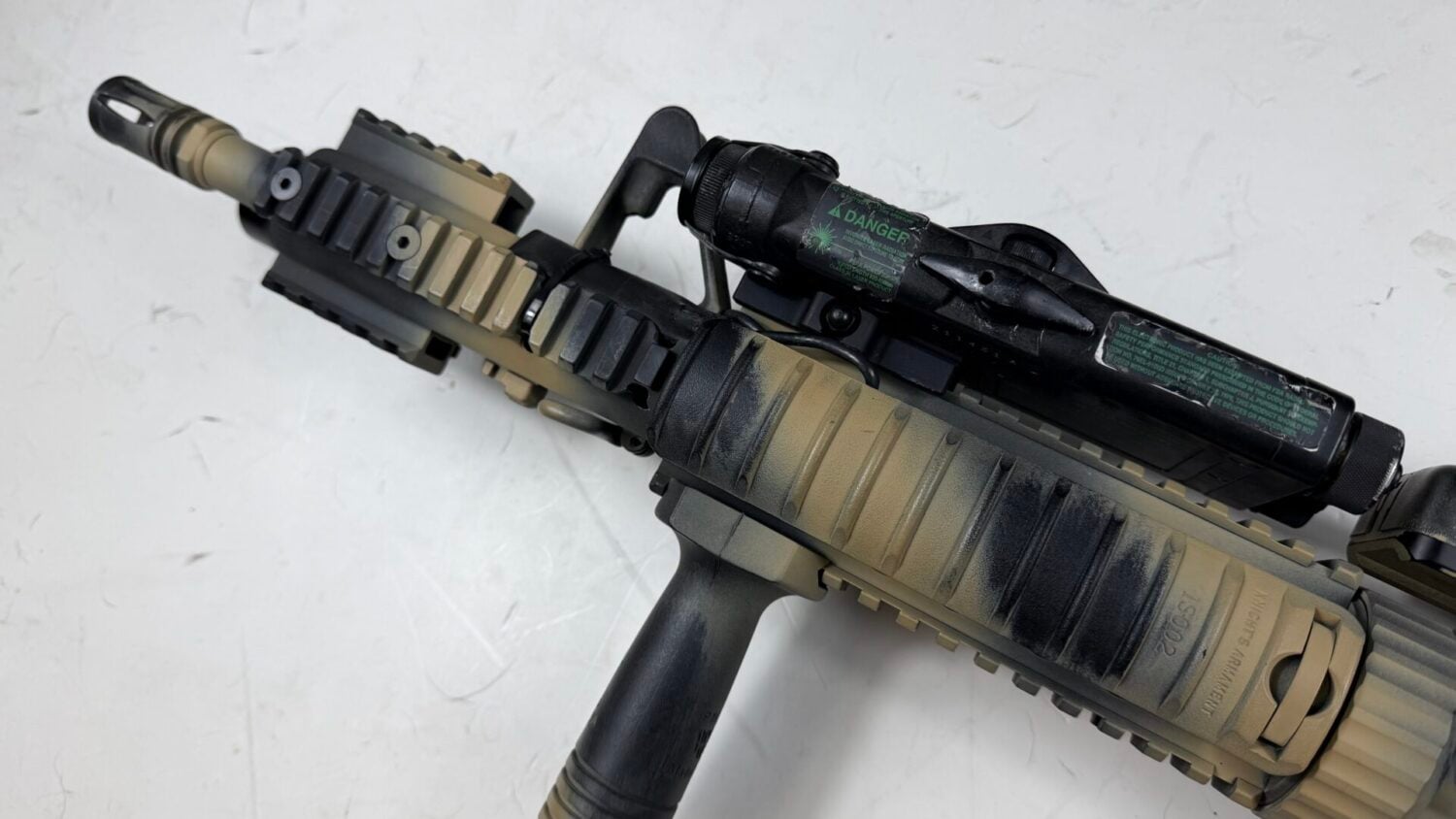
The MRE is closely associated with the Knight’s Armament Company (KAC) MRE—Modular Rail Extension system. The basic idea was remarkably straightforward: give a carbine more usable rail space without abandoning the traditional front sight base and gas system architecture.
At a time when accessory rails were becoming increasingly important, this was a meaningful development. A conventional carbine handguard provided limited real estate for lights, lasers, grips, sling mounts, and other accessories. The MRE extended the rail forward, creating additional mounting space while retaining the familiar front sight arrangement. The result was visually distinctive.
Instead of the short handguards associated with earlier M4 configurations, the MRE stretched forward around the front sight, creating a long, continuous-looking rail system. It offered what contemporary enthusiasts sometimes jokingly described as “more real estate”—a phrase that neatly captures the concept behind the design. The MRE wasn’t simply about appearance. It represented an important transitional moment in carbine development: the point at which accessory integration was becoming a fundamental part of rifle design.
Historical discussions of the KAC MRE commonly distinguish between different versions of the system, including Model A and Model B configurations. Enthusiast documentation also illustrates how the system was used with combinations of period optics, aiming devices, lights, vertical grips, and other accessories.
A Rifle From the Transitional Era
To understand the MRE’s appeal, it helps to understand when it appeared. The early 2000s were a fascinating period for the AR-15/M4 family. The basic carbine was already proven, but the ecosystem surrounding it was changing rapidly.
Red-dot sights were becoming increasingly common. Night-vision and infrared aiming equipment were becoming more integrated into small arms. Weapon-mounted lights were no longer unusual accessories. Free-float handguards were gaining acceptance. Specialized stocks, sling mounts, grips, and other accessories were becoming increasingly sophisticated. Yet the modern, ultra-slim M-LOK rifle had not arrived. That gives the MRE its distinctive character.
It belongs to a generation of rifles where Picatinny rail was king. The rifles were highly modular, but they were also visibly mechanical. Rails were large. Accessories were substantial. Optics were often bulky. Equipment frequently looked like it had been added to a rifle because someone actually needed it, rather than because a designer wanted the finished product to look minimal. The MRE is a snapshot of that moment.
Why the MRE Became So Iconic
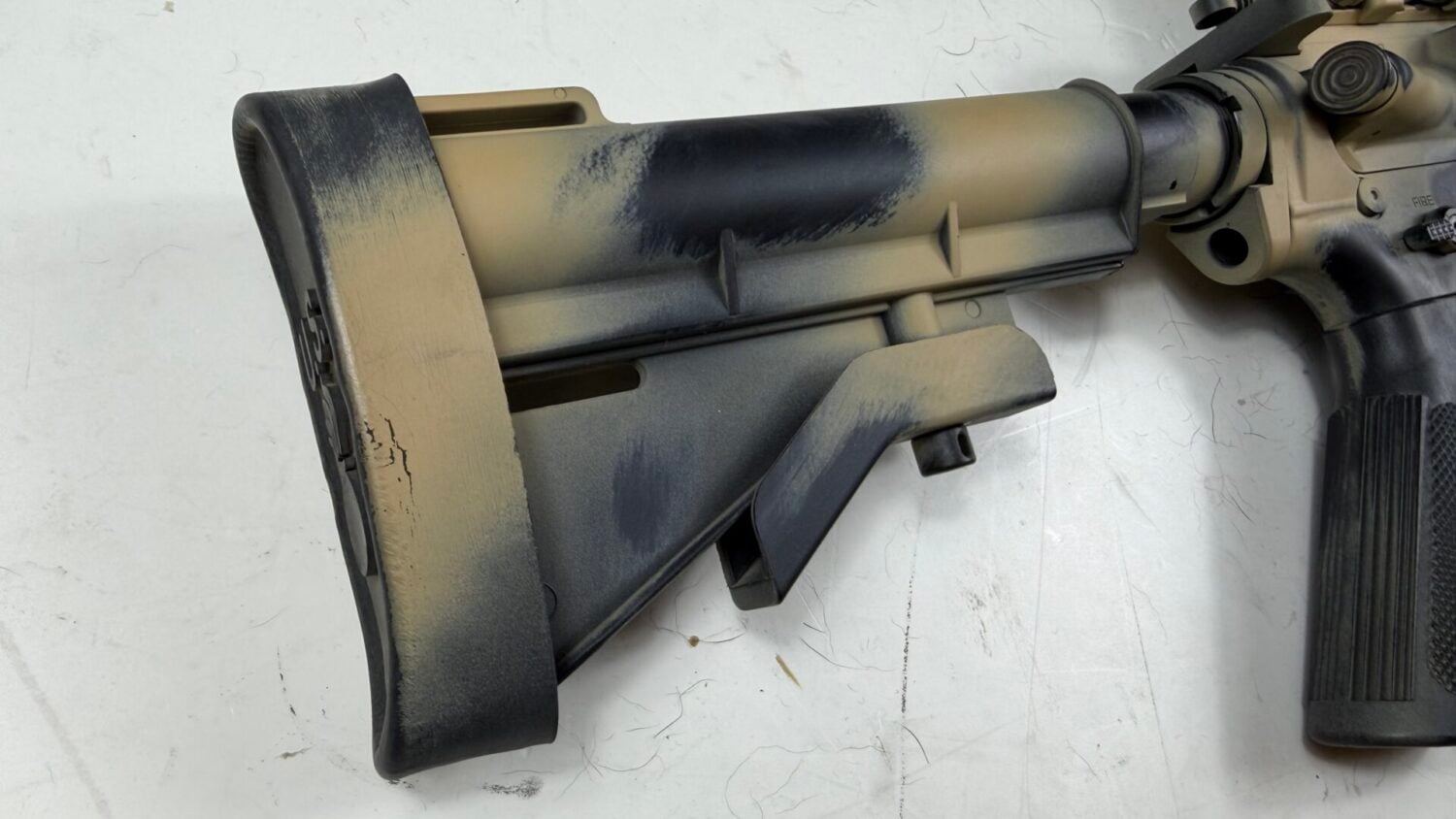
The MRE configuration eventually developed a following far beyond its original practical purpose. Part of that comes from its association with early special-operations carbine configurations and the visual language of the period. But there is another reason, and its because the MRE simply looks different.
A modern free-float AR can be extremely refined. Slim handguards, integrated accessory mounting systems, low-profile gas blocks, and minimalist receivers have transformed the appearance of the contemporary carbine. The MRE goes in the opposite direction. It has presence.
The long rail, visible front sight, classic receiver profile, and period-correct accessories create a silhouette that immediately evokes the early Global War on Terror era. Among military-rifle enthusiasts, the configuration has become a kind of visual shorthand for that period.
Modern clone-build communities continue to recreate MRE-style rifles, with enthusiasts frequently seeking period-specific combinations of rails, optics, stocks, lights, and other components. That enthusiasm has also created a problem. Building an authentic-looking historical configuration can be difficult.
The Problem With Recreating History
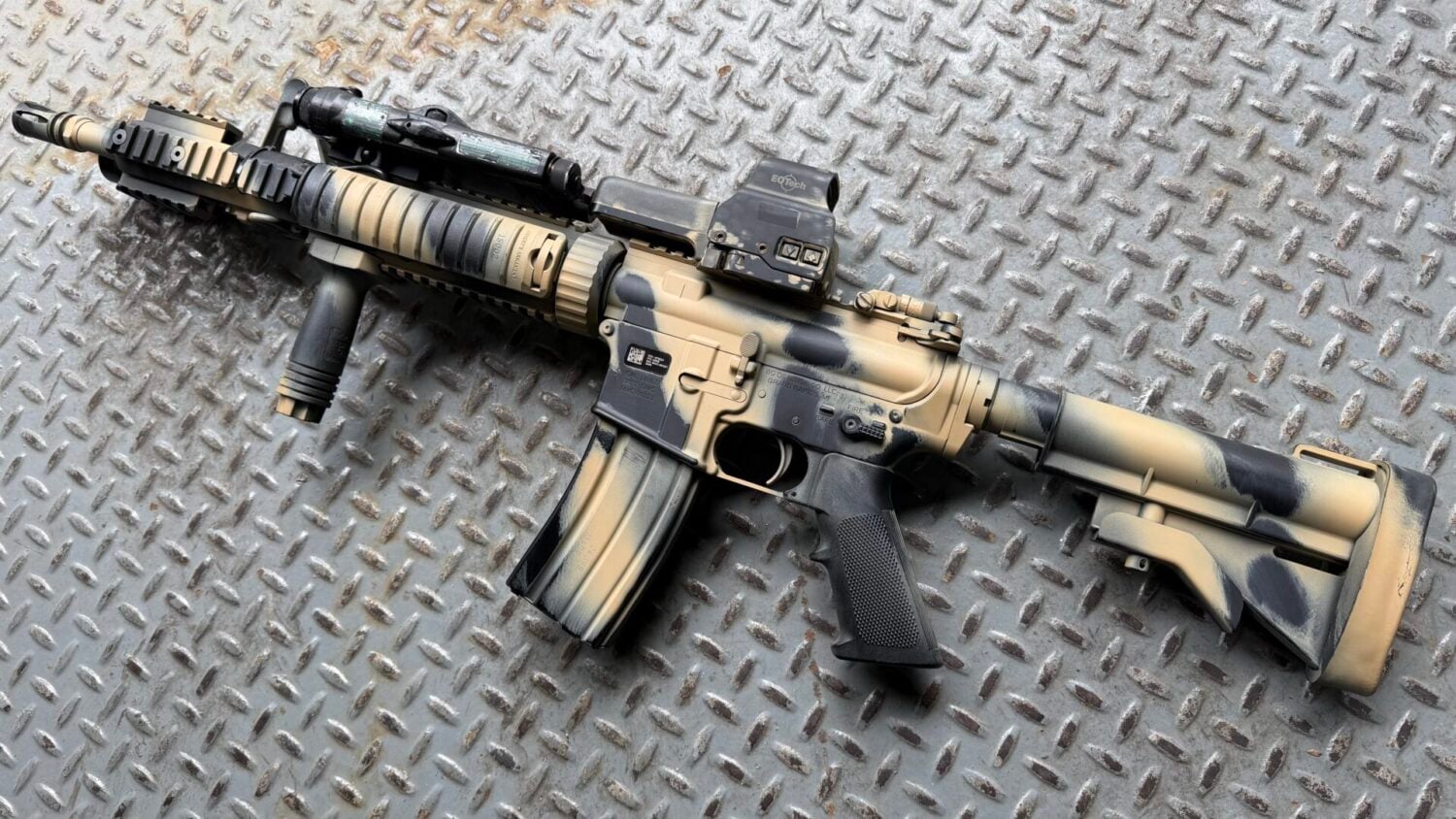
One of the challenges with any retro or clone-inspired firearm is that the original components may no longer be readily available. Some parts were produced in comparatively small numbers. Others have become collector’s pieces. Still others were never widely available to the civilian market in the first place.
That can turn a historically inspired project into a search for increasingly obscure components. Even when the parts can be found, recreating a rifle exactly as it appeared two decades ago isn’t necessarily the same thing as creating the best modern rifle. This is where the concept of a restomod becomes important.
What Is a Restomod?
The term “restomod” originated largely in the automotive world. A classic car might retain its original appearance and character while receiving modern mechanical components, improved brakes, updated suspension, modern electronics, or other contemporary upgrades. The philosophy is simple which is to preserve what made the original special without being trapped by the limitations of its era. That same idea translates surprisingly well to firearms.
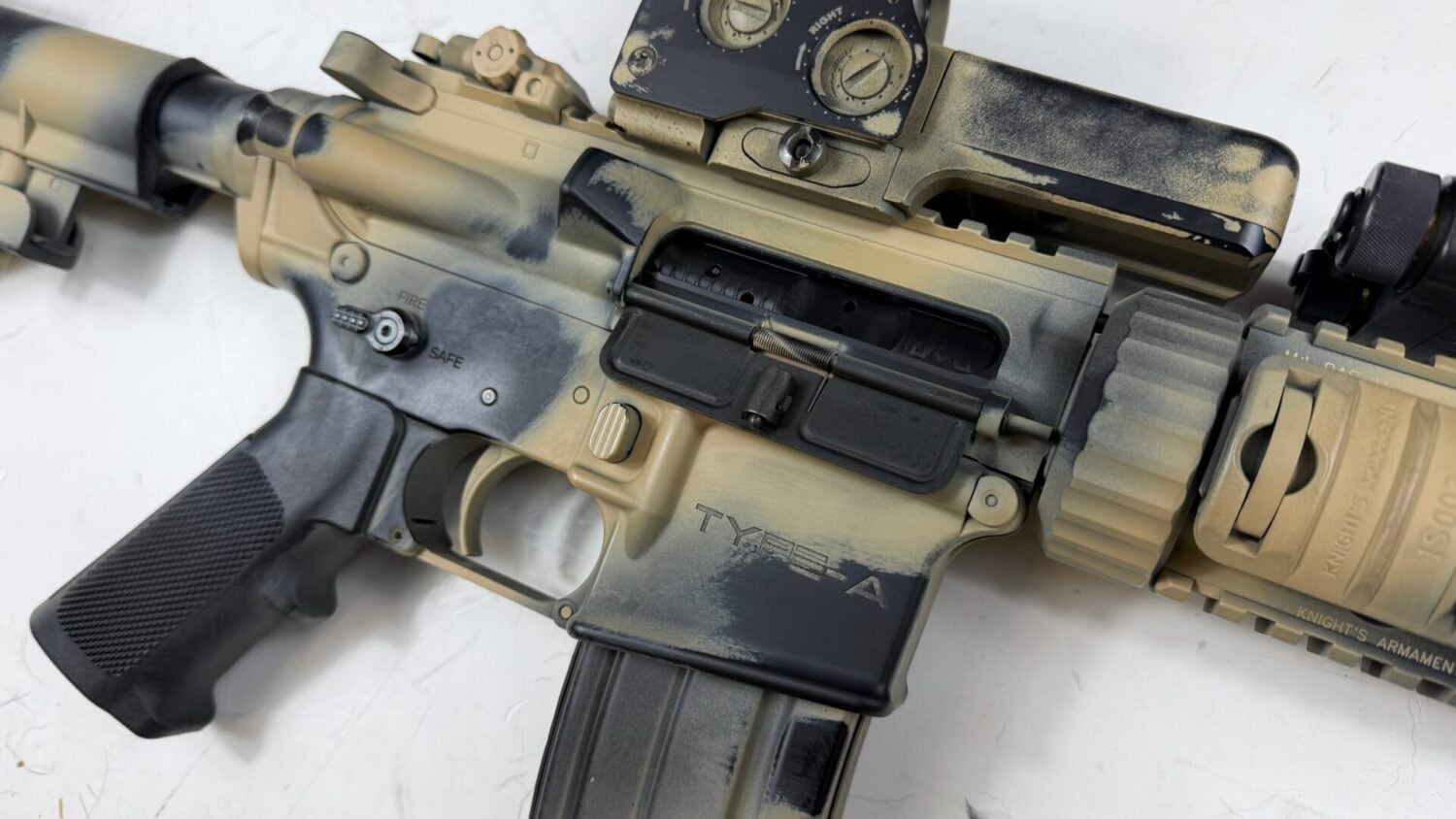
A historical clone attempts to reproduce the original as closely as possible. A restomod takes the spirit, proportions, visual identity, and design philosophy of the original and reinterprets them using contemporary manufacturing and components. That specific distinction is central to understanding the TYPE-A Rifles Restomod Series.
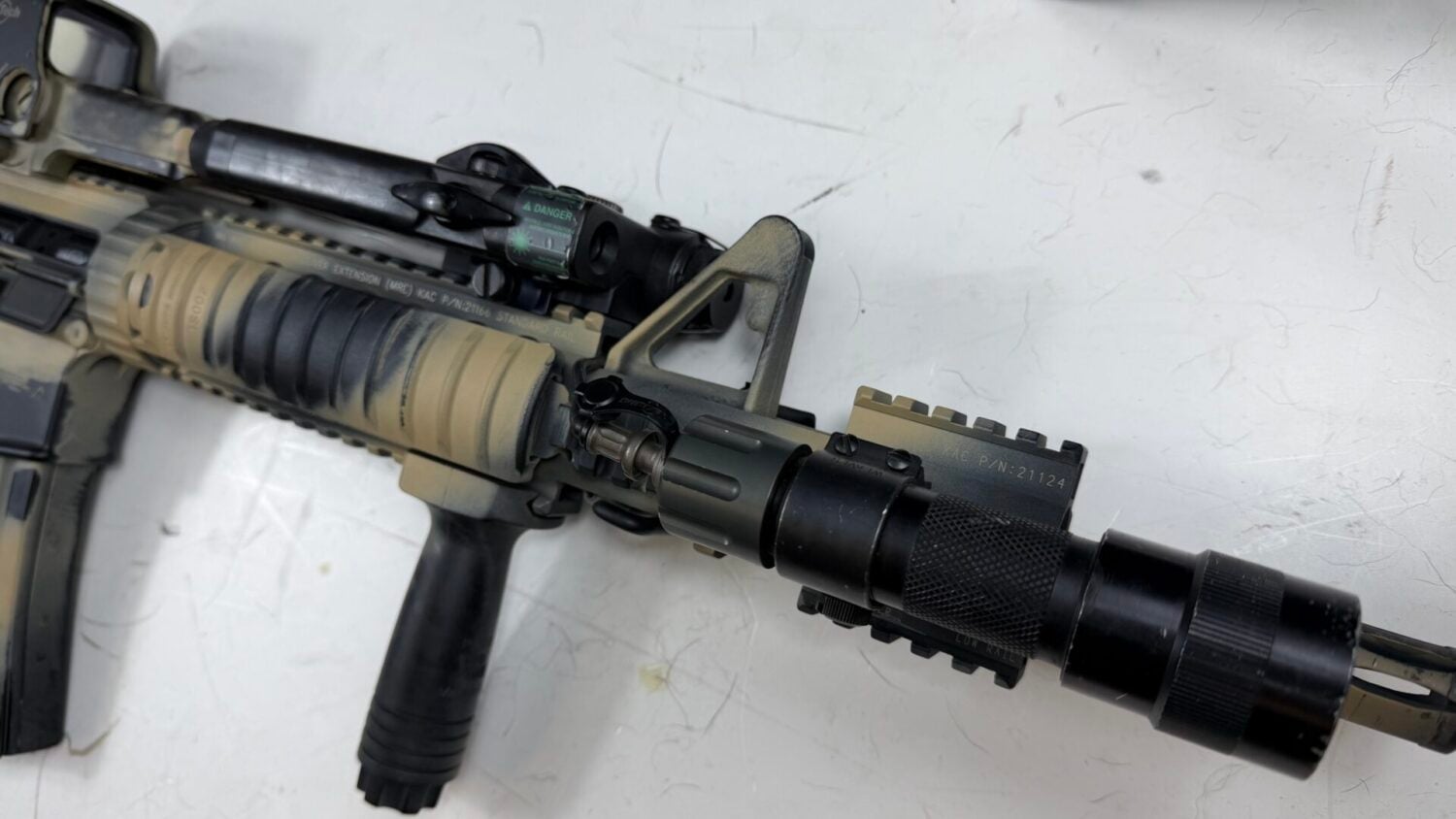
TYPE-A Rifles and the Restomod Philosophy
TYPE-A Rifles has built its reputation around producing modern AR-pattern rifles and components, with almost everything being completely manufactured in house. Our company has also developed historically inspired rifles that reinterpret recognizable configurations from different eras of AR development. The Restomod Series takes that philosophy one step further.
Instead of treating historical rifles as museum pieces, TYPE-A approaches them as design inspiration. Our MRE is an excellent example.
The goal isn’t simply to pretend that a contemporary rifle is a military-issued carbine from 20 years ago. Instead, the concept is to capture the character that made the original configuration memorable while applying modern manufacturing standards and contemporary expectations. It looks back without being stuck in the past.
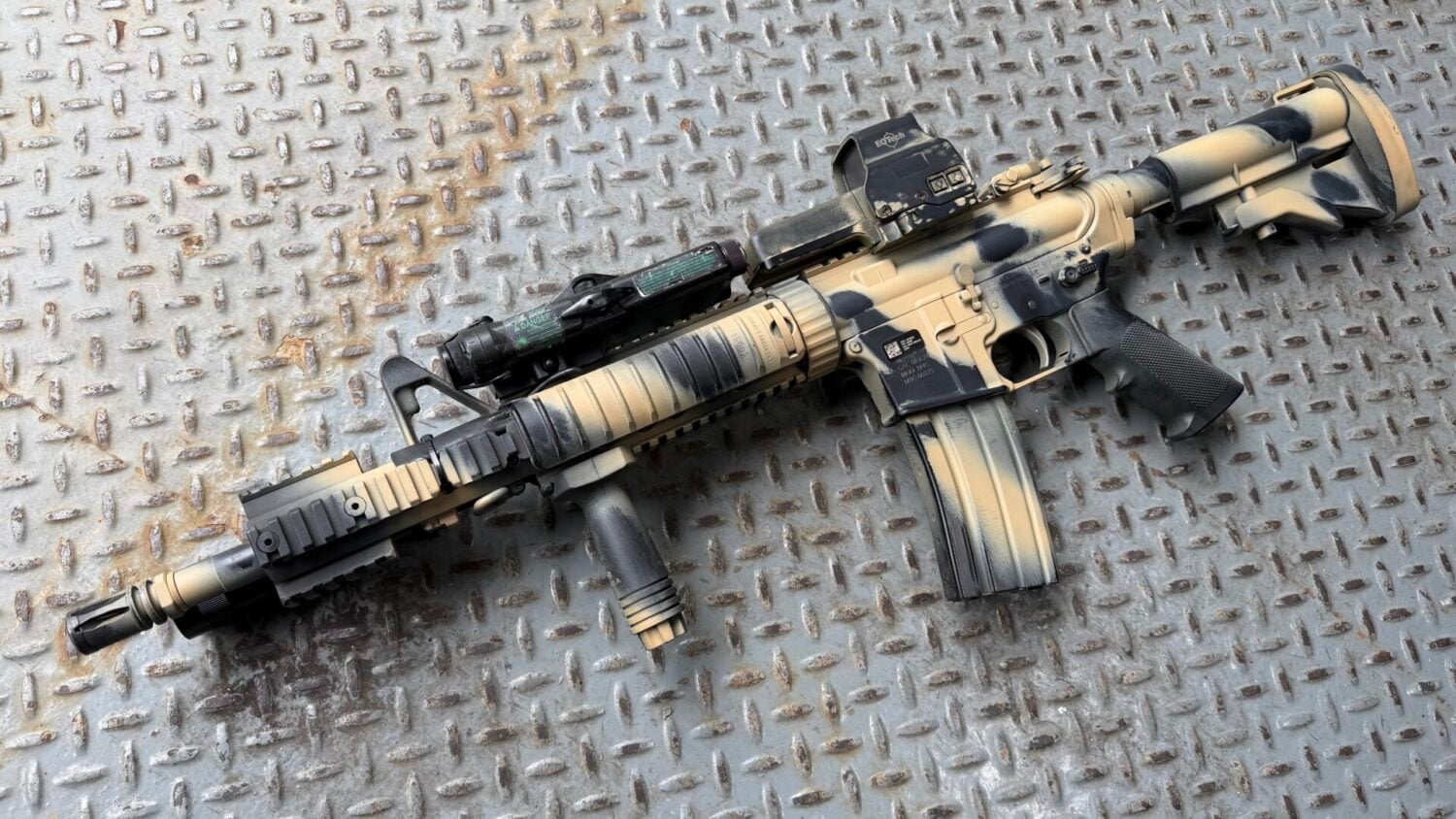
Bringing the MRE Back to Life
The MRE is particularly well suited to the restomod treatment because its underlying concept remains relevant. The original system was fundamentally about flexibility.
More rail space meant more options. The rifle could accommodate the growing collection of accessories that characterized the era, while retaining a familiar carbine layout. That philosophy hasn’t disappeared but rather, what has changed is the technology.
Today’s manufacturing allows companies like TYPE-A to reproduce the visual character of an older rifle while applying modern machining, materials, coatings, quality control, and component integration. The result is not simply a reproduction. It’s an interpretation. And that is precisely what makes the Restomod Series such a commercial success for us.
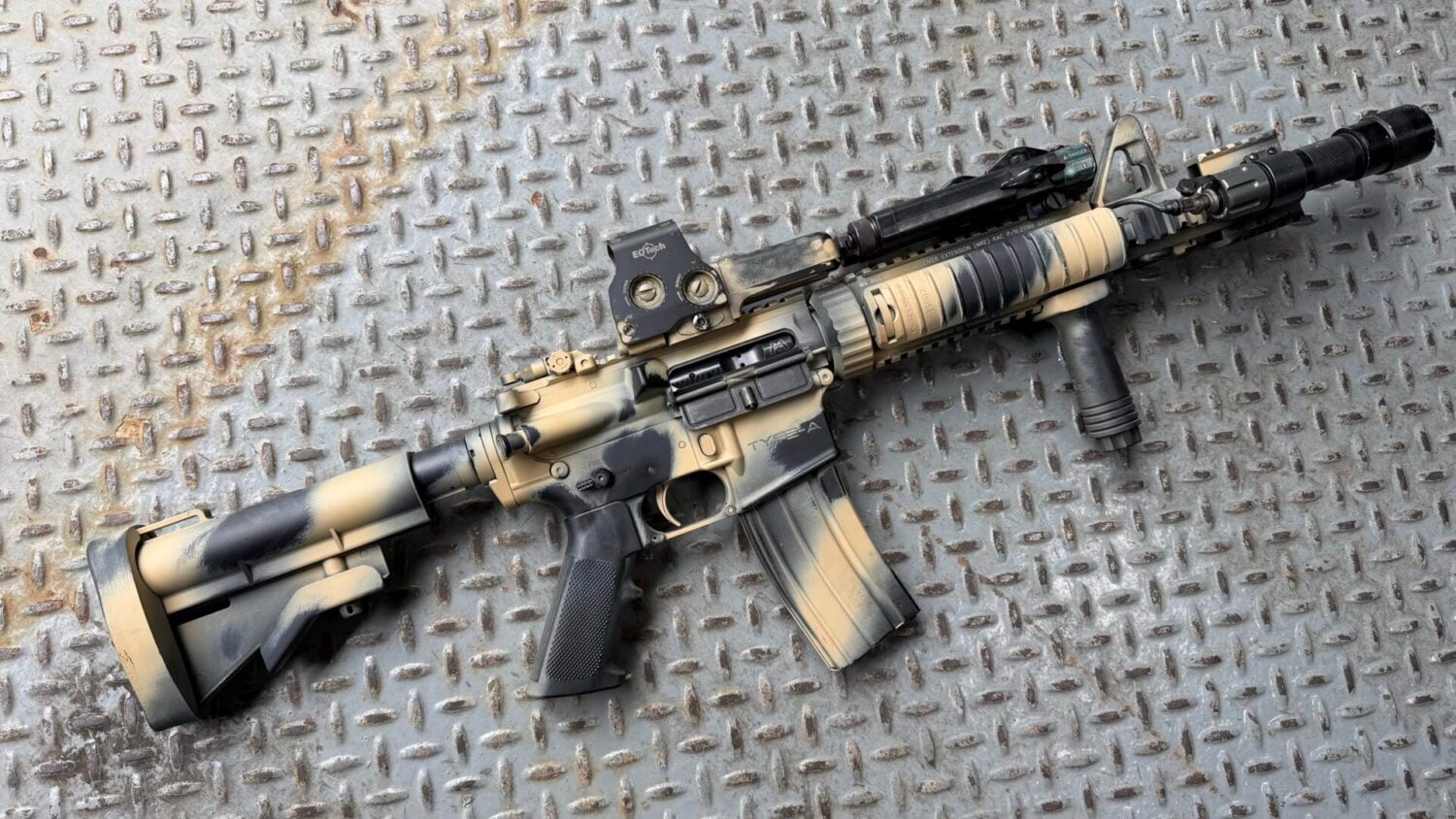
Old-School Looks, Modern Manufacturing
One of the most interesting aspects of a restomod rifle is the contrast between what the eye sees and what the manufacturing process represents. At first glance, an MRE-inspired rifle looks like something that could have appeared in a photograph from the early 2000s. Look closer, however, and the philosophy is different.
Modern manufacturing techniques, contemporary component standards, and current production capabilities allow the rifle to retain the visual language of the original while avoiding the idea that every component has to come from the same historical production run.
The purpose isn’t historical cosplay. It is design preservation. Our rifle is celebrating an era of engineering rather than pretending that the calendar stopped in 2004.
Why the MRE Still Matters
It would be easy to dismiss the MRE as simply a retro aesthetic. That would miss the bigger story. The MRE represents a point in the evolution of the AR platform when the rifle was becoming increasingly modular and increasingly specialized.
The progression from traditional handguards to extensive accessory rails—and eventually to today’s lightweight modular systems—is part of a much larger story about how users interact with the AR platform.
The MRE sits directly in the middle of that transition. It demonstrates an important principle of firearm design: Sometimes the most interesting innovations aren’t revolutionary. They’re Transitional.
Looking back, the MRE didn’t completely reinvent the carbine. Rather, it addressed an emerging requirement—additional accessory space—using the technology available at the time. That same pattern can be seen throughout modern small-arms development.
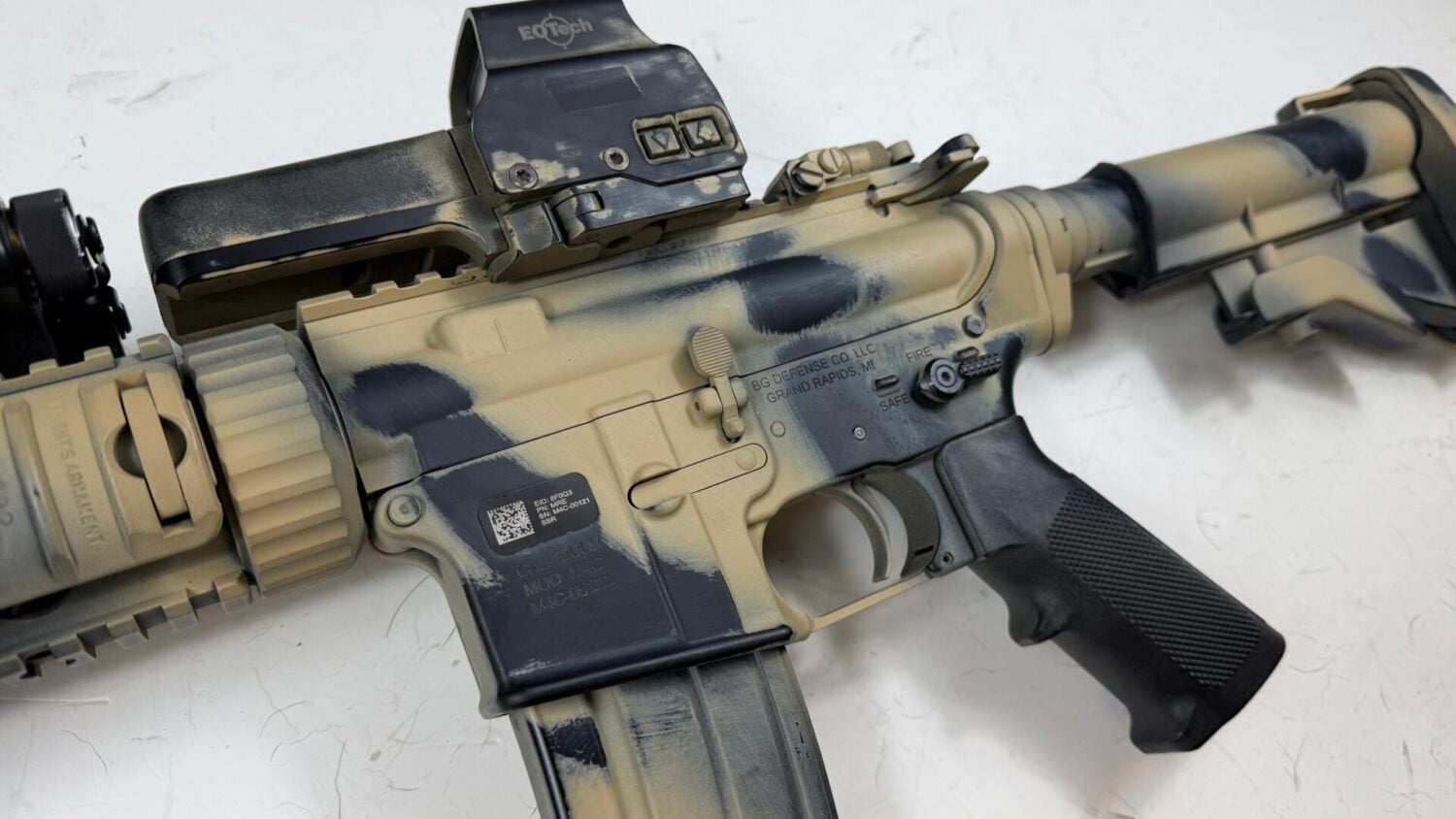
From Clone Culture to Design Culture
The growing popularity of historically inspired rifles has also changed how enthusiasts think about firearms. There is certainly a collector component to the hobby. Some people want exact reproductions because the historical details matter to them. There is another group interested in something slightly different. They want to understand why a particular rifle looked the way it did.
Why did it have that rail? Why was the optic mounted there? Why did the front sight remain? Why did operators use that particular stock or grip? Those questions turn a rifle from an object into a piece of design history.
Our Restomod concept fits naturally into that way of thinking. Instead of asking, “How can we reproduce this rifle exactly?” the more interesting question becomes: “What made this rifle worth remembering, and how can we reinterpret those qualities today?”
The MRE’s Second Life
The resurgence of interest in the MRE is part of a larger appreciation for early modern military rifle design. Collectors and enthusiasts have increasingly revisited the rifles of the late 1990s and early 2000s, a period that once seemed too recent to be considered “retro.”
Now, two decades later, the period has its own unmistakable visual identity. The MRE sits near the center of it. Its long rail, traditional front sight, and unmistakable early-GWOT character have made it one of those configurations that enthusiasts immediately recognize.
We here at TYPE-A Rifles are helping ensure that the design doesn’t disappear simply because its original production era has passed.
A Modern Interpretation of a Classic Idea
The most successful restomods aren’t the ones that merely look old. They’re the ones that explain why the original design mattered. It was born during a period when the AR platform was rapidly evolving. It answered a real problem with the technology of its time. It became associated with a distinctive generation of military carbines. And eventually, it became a recognizable piece of modern firearms history.
TYPE-A Rifles’ Restomod Series gives that history another chapter. Rather than freezing the MRE in the past, the concept allows its distinctive design language to move forward. The rifle can retain the visual character and historical inspiration that enthusiasts appreciate while benefiting from contemporary manufacturing and modern expectations.
That is the essence of a restomod. The past provides the inspiration. The present provides the execution. And in the case of the MRE, that combination makes for a rifle that is more than a throwback.It’s a second life for a design that helped define an era.